Types of Coffee Brewing Methods Explained: Which One Suits You? (2026)
The Chemex 3-Cup Classic Pour-Over is the best brewer for clarity and nuance — thick paper filters remove oils and fine grounds that French press leaves behind, producing a clean, bright cup. Pour-over takes 4–5 minutes and rewards attention to grind size and water temperature.
At a Glance
| # | Product | Award | Price |
|---|---|---|---|
| 1 | Our Top Pick | $41.95 Buy → |
|
| 2 | Best French Press | $26.07 Buy → |
|
| 3 | Best Cold Brew | $34.99 Buy → |
|
| 4 |  Coffee Gator Pour Over Coffee Mak… Coffee Gator Pour Over Coffee Mak…Coffee Gator |
Best Pour Over | $23.39 Buy → |
Types of Coffee Brewing Methods Explained Buying Guide
 Photo by Jonathan Borba / Pexels
Coffee brewing methods differ in extraction approach — how much water contacts how much coffee for how long. Each combination produces a different flavor profile. The method you choose should match your priorities: speed, flavor complexity, daily convenience, or budget. Here's what each method actually produces.
Drip Coffee (Auto-Drip Machine): The Baseline
Automatic drip machines ($25–$300) are in 40% of American households. Hot water passes through a filter basket with ground coffee, dripping into a carafe. Simple, consistent, hands-off. Weaknesses: most cheap machines brew at 185–195°F (should be 195–205°F for proper extraction), resulting in under-extracted, slightly sour or weak coffee. Quality drip machines (Technivorm Moccamaster $23.39, OXO Brew $23.39) brew at the correct temperature and hit the SCAA gold standard. Budget entry: Bonavita 8-cup ($50–$70) brews at proper temperature — the biggest bang-for-buck upgrade from a $25 basic machine. Use medium grind, 1:15 ratio.
Pod Machines (Keurig, Nespresso): Convenience at a Cost
Pod machines brew single servings in 60–90 seconds using pre-portioned capsules. No grinding, no measuring, minimal cleanup. Keurig uses k-cups (drip-style, mild to medium body, $0.40–$0.80/cup). Nespresso uses aluminum capsules (pressure-extracted, stronger and more espresso-like, $0.80–$1.40/cup). Ongoing cost: $200–$500/year for pods vs. $50–$150/year for ground coffee in a drip machine — the pod premium is real. Best for: households with different coffee preferences (each person picks their pod), offices, people who drink 1 cup per day and don't want to manage a half-empty carafe. See our Keurig vs Nespresso comparison for detailed recommendations.

Pour-Over: Precision Flavor
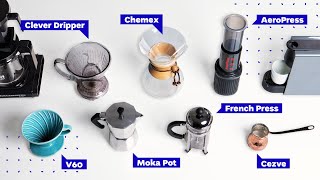
Pour-over (Chemex, V60, Kalita Wave) involves manually pouring hot water over grounds in a filter in a circular pattern. This manual control over pour rate and temperature produces the clearest, most nuanced cup of any home method — the paper filter removes oils that muddy the flavor, revealing the bean's actual character. Best for single-origin, light-roast specialty coffee. Time: 4–5 minutes of active attention. Equipment: Hario V60 cone ($10–$20) + filters ($23.39 for 100) + a gooseneck kettle ($30–$80 for temperature control) + burr grinder ($40–$80). The gooseneck kettle is more important than the brewing cone — water flow control makes the biggest difference. Chemex ($40–$55) doubles as a beautiful carafe and produces a cleaner cup than the V60 due to thicker filters.
French Press: Full Body and Oils
4-minute immersion brew, metal filter retains coffee oils, produces the most full-bodied cup of any home method. Best for dark roasts and single-origin beans where you want to taste the whole profile. Requires coarse grind (blade grinders produce sludge). Cleanup: dump grounds, rinse. Equipment: $20–$45 for a quality press (Bodum Chambord, ESPRO). No filters to buy. Our cold brew vs French press guide covers the full comparison.
Aeropress: The Versatile Underdog
The Aeropress ($35–$45) is a plastic cylinder that uses manual air pressure to push water through grounds in 1–2 minutes. It can make concentrated espresso-style shots, American-style coffee, or cold brew concentrate. The most versatile home brewing method — adjust grind size, water temperature, and steep time to hit any style. Recommended for: travelers, experimenters, single-cup brewers who want flexibility. The AeroPress Go ($35) is the travel version. Downside: the plastic aesthetic doesn't appeal to everyone, and it only makes one cup at a time.

Espresso Machines: Investment for the Right Buyer
True espresso requires 9 bars of pressure — only dedicated espresso machines deliver this. Entry-level semi-automatic machines ($300–$500): DeLonghi Dedica EC685 ($200–$250), Breville Bambino ($300–$350). Mid-range ($500–$800): Breville Barista Express (built-in grinder, $700), DeLonghi La Specialista ($700). The honest assessment: a quality espresso setup (machine + grinder + scale) costs $500–$1,500 and requires a learning curve of 1–4 weeks to dial in. If you buy $5 lattes daily ($1,800/year), the investment paybacks in under a year. If you want "good espresso sometimes," a Nespresso Vertuo ($150–$200) produces a reasonable facsimile without the learning curve. See our affordable alternatives to Breville for the full espresso machine comparison.
Moka Pot: Budget Espresso Approximation
The Moka pot ($25–$35, Bialetti Moka Express) is a stovetop device that forces near-boiling water through packed grounds under steam pressure. The result is strong, concentrated coffee — not true espresso (3–4 bar vs. 9 bar) but significantly stronger than drip. Popular in Italian households for decades. Best for: households wanting strong coffee or milk drinks (cappuccino approximations) without a $23.39 machine investment. Use medium-fine grind, don't pack grounds too tight, remove from heat when you hear gurgling. A 3-cup Bialetti ($23.39) makes about 1–2 standard cups of concentrated coffee.
Cold Brew: Low Acid, High Convenience
12–24 hour cold steep produces smooth, low-acid concentrate that lasts 2 weeks refrigerated. The most convenient method for daily iced coffee drinkers — batch once, drink all week. See our cold brew vs French press guide for full details. For the full method comparison with equipment recommendations, see best manual coffee brewers under $50 and best burr grinders for the grinder upgrade that improves every method.
“”
See Today’s Price →What we like
- Chemex-bonded filters remove oils and fine particles for a clean, bright cup without bitterness
- Hourglass glass design doubles as a carafe for table serving directly from the brewer
- 3-cup size is ideal for solo brewing or sharing two generous mugs without waste
Watch out for
- Pour-over technique requires attention during brewing — cannot walk away like a drip machine
- Proprietary Chemex filters are thicker and more expensive than standard paper filters
Read Full Analysis
The Chemex 3-Cup is the pour-over method's clearest expression as a finished product — the hourglass borosilicate carafe and proprietary bonded filter work together to produce a cup that's consistently described as brighter and cleaner than French press output, with oil and fine particle removal that the Secura's metal screen cannot fully achieve. The thick Chemex filters slow the flow rate and increase contact time in a controlled way, which translates to extracted clarity rather than just slow drip. The 3-cup capacity (roughly 500ml) serves one generous mug or two standard-size cups without waste. The technique requirement is real: pour-over demands measured water temperature (195-205°F), a consistent slow circular pour pattern, and 3-4 minutes of active attention. Unlike the Hamilton Beach Scoop or a standard drip maker, you cannot set it and walk away. The proprietary Chemex filter is thicker and costs more per filter than standard paper filters, which adds ongoing cost relative to the Secura French press or metal-filter options. For households prioritizing clean, delicate, fruit-forward coffee profiles — particularly light roasts — the Chemex produces a result no other brewer on this page can replicate.
“”
See Today’s Price →What we like
- Full immersion brewing extracts the complete flavor profile including oils that paper filters remove
- No paper filters needed — zero ongoing cost after purchase for filter consumables
- Triple-layer stainless steel press screen produces a cleaner cup with fewer grounds than basic designs
Watch out for
- Immersion method requires 4-minute steep timing — less hands-off than automatic drip makers
- Metal press allows fine grinds to pass through — requires coarser grind than pour-over or drip
Read Full Analysis
The Secura French Press at $26.42 makes a strong case as the lowest-cost entry to full-immersion brewing on this list. French press preserves coffee oils and produces a heavier, fuller body than any filter-based method — the Chemex pour-over and Hamilton Beach drip both strip these oils in the filtering process. For dark roasts and coffee drinkers who prefer weight and richness over brightness and clarity, the French press method outperforms paper-filter alternatives on taste, not just price. The triple-layer stainless steel screen is a meaningful upgrade over single-layer press designs, reducing the fine grounds that pass through and deposit at the bottom of the cup — a common complaint with budget French press options. The 4-minute steep is easy to time and completely hands-off during brewing, making it no more demanding than a standard drip maker beyond the initial setup and the manual plunging step. No ongoing filter cost after purchase is a genuine advantage over the Chemex at comparable or longer ownership periods. Grind size matters: too fine and the press screen clogs or passes grit; a coarse grind produces a cleaner result.

“Please refer to user guide or user manual or user guide (provided below in PDF) before first use. 4.6 stars from 67,499 Amazon reviews signal consistent reliability.”
See Today’s Price →What we like
- Patented fine-mesh filter produces smooth low-acid cold brew without paper filter replacements
- 1-quart glass pitcher fits standard refrigerator door shelves for convenient overnight steeping
- Tight-sealing lid prevents refrigerator odors from absorbing into cold brew during the steeping period
Watch out for
- Cold brew requires 12 to 24 hours of steeping — not suitable for same-day coffee cravings
- Glass construction is fragile compared to plastic alternatives for households prone to drops
Read Full Analysis
The Takeya cold brew maker earns its 4.6-star rating across 67,499 Amazon reviews — one of the largest review samples on this list — through a combination of design choices that solve the common problems with DIY cold brew. The patented fine-mesh filter retains grounds without paper filters, producing a cleaner result than cheesecloth setups while eliminating ongoing filter costs. The 1-quart glass pitcher is sized to fit standard refrigerator door shelves, meaning it does not occupy a full shelf during the 12-24 hour steeping period. The 12-24 hour time commitment is the fundamental trade-off of cold brew as a method: it is not a same-day solution. For households that plan ahead and batch-brew concentrate to dilute over the week, the Takeya makes the process low-effort — fill, refrigerate, wait. The resulting cold brew is measurably less acidic than hot-brewed iced coffee, which is the main reason cold brew has a dedicated following despite the long lead time. At $23.39, the glass construction is the durability concern — it handles the refrigerator reliably but is vulnerable to countertop drops. For the method-curious, the Takeya is the lowest-friction cold brew entry available.
“Channel your inner barista with our pour over coffee dripper and brew the perfect cup of coffee in minutes. 4.5 stars from 8,444 Amazon reviews signal consistent reliability.”
See Today’s Price →What we like
- Laser-cut stainless steel mesh filter is reusable indefinitely — eliminates paper filter purchases
- Heat-resistant glass with cool-touch collar allows safe handling at full brewing temperature
- BPA-free materials throughout are safe for daily hot-liquid contact over years of use
Watch out for
- Metal mesh filter allows more coffee oils through than paper — thicker body than Chemex-style pour-overs
- Pour-over technique requires practice — uneven pouring produces inconsistent extraction results
Read Full Analysis
The Coffee Gator at $23.39 brings two meaningful upgrades over the Chemex approach at a lower price: a reusable laser-cut stainless mesh filter that eliminates paper filter purchases permanently, and heat-resistant glass with a cool-touch collar for safe handling at full brewing temperature. The metal mesh allows more coffee oils into the cup than Chemex's thick bonded filters, producing a slightly fuller body while maintaining the active pour-over method. For drinkers who prefer the pour-over ritual but want a richer cup than paper-filter styles deliver, the Coffee Gator sits in that middle ground. The 4.5-star rating from 8,444 reviews confirms consistent performance at this price. Pour-over technique requires attention — water temperature control and a deliberate slow circular pour matter for extraction quality — but the Coffee Gator does not penalize inconsistent pouring as harshly as finer-ground or more sensitive methods. At $23.39 with no ongoing filter cost, the long-run value over paper-filter systems is clear. The mesh filter requires rinsing after each use but is dishwasher-safe for a more thorough clean. Between this and the Chemex on this page, choose the Coffee Gator for fuller body at a lower price; choose the Chemex for the cleanest, brightest, most delicate cup.
Frequently Asked Questions
Which coffee brewing method makes the strongest coffee?
What is the difference between drip and pour-over coffee?
Is a Nespresso as good as a real espresso machine?
What grind size do I need for each brewing method?
How much coffee should I use per cup?
What is the cheapest way to make good coffee at home?
How We Analyze Products
We analyze Amazon review data — often thousands of reviews per product — to surface patterns that individual buyers miss. Our process aggregates star ratings, review counts, and buyer sentiment at scale, identifying which strengths and weaknesses appear consistently across the largest review samples available. The 114,536+ reviews analyzed on this page represent real verified-purchase feedback from Amazon buyers.
Each product earned its placement through data: total review volume, average rating, and the specific praise and complaints that repeat most often across buyers. No manufacturer paid for placement on this page. Products appear here because buyers endorsed them at scale, not because a company asked us to feature them.
We use AI to summarize review sentiment — not to fabricate opinions, but to condense what thousands of buyers actually wrote into a readable format. The pros and cons you see reflect the most common themes found in verified purchaser reviews, paraphrased for clarity. We do not claim to have accessed Reddit, YouTube, or specific publications in generating these summaries.
Prices shown reflect Amazon pricing at the time this page was last generated. Click “See Today’s Price” to get the current live price on Amazon. Read our full methodology →