Best Guitar Capos (2026)
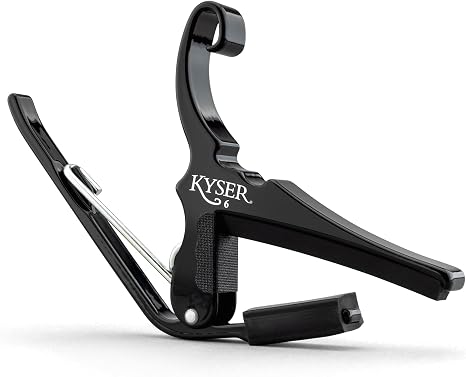
Kyser Quick-Change Guitar Capo ($24.95) is the best capo — one-handed instant placement, compatible with any 6-string, and the most-used capo by both beginners and professional guitarists.
See Today’s Price →At a Glance
Guitar Capos (2026) Buying Guide
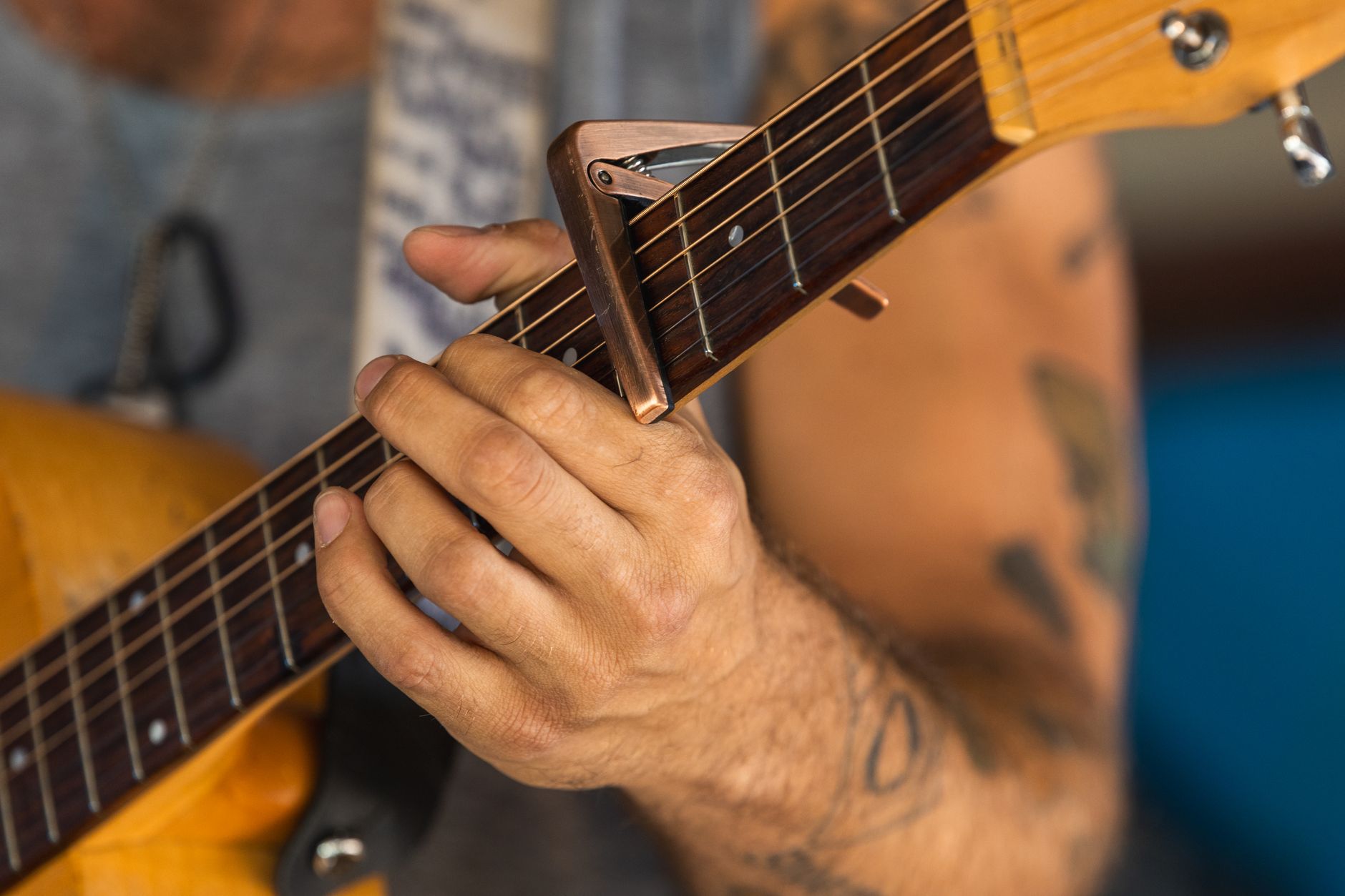 Photo by Stepan Vrany / Pexels
How we picked these. We compared guitar capos across clamp mechanism type (spring vs. partial capo vs. screw), tension adjustability, padding quality, intonation impact, and neck profile compatibility, cross-referencing picks from guitar educators, Guitar World, and verified player reviews. Products were selected for secure, pitch-accurate performance across common neck shapes.
What a Guitar Capo Does
A capo clamps across all strings at a specific fret, effectively raising the pitch of the entire guitar without retuning. It lets you play open chord shapes in any key — if you know G, C, D, and Em, a capo on the 2nd fret turns that into A, D, E, and F#m. Capos are essential for guitarists who play with singers, since you can find the key that fits a voice without learning entirely new chord shapes. They're also central to folk, country, and pop guitar styles. Every guitarist needs at least one reliable capo.
Kyser vs. Shubb: The Two Schools of Capo Design
Kyser Quick-Change uses a spring-tension clamp — squeeze, place, release. One-handed, instant, simple. The trade-off is that spring tension is fixed: it may apply slightly too much pressure on some guitars (causing slight tuning issues) or too little on guitars with higher action. Shubb uses a screw-adjustment system — you set the exact tension for your specific guitar's string gauge and action. More precise but requires two hands and a moment to adjust. Professional and studio players often prefer Shubb for intonation accuracy; gigging players who need quick key changes prefer Kyser. Both are the industry standards for their respective designs.
D'Addario NS Tri-Action: The Modern Tension-Adjustable Option
D'Addario's NS Tri-Action capo combines the speed of a squeeze-clamp with adjustable tension via a micro-adjustment roller. You can fine-tune the pressure for your specific guitar without the full set-and-lock process of a Shubb. At $22.95, it's positioned between the Kyser ($25) and Shubb ($23) price points but offers more precision than either at similar speeds. For guitarists who've struggled with tuning issues caused by spring-tension capos, the NS Tri-Action is often the solution.
Paige and G7th: The Specialty Options
Paige capos use a different clamping mechanism designed for extremely low action — a preferred choice among fingerstyle players who need precise control. At $40, it's a specialty purchase. G7th Performance at $39.95 is the professional touring capo — elegant design, ultra-fast placement, and tension adjustment, used by artists who need everything on stage to work perfectly every time without thought. For most players, Kyser or Shubb delivers 95% of the performance at 30% of the G7th price.
Related Guides
- Best Guitar Tuners
- Best Guitar Picks
- Best Guitar Strings
Watch Before You Buy

“The Kyser Quick-Change operates single-handed for fast key changes mid-song and clips securely to the headstock when not in use — a 25+ year design with durable aluminum construction at $24.95.…”
See Today’s Price →What we like
- One-handed operation for quick key changes mid-song
- Extremely durable aluminum construction
- Available in a wide range of colors and finishes
- Clips securely to headstock when not in use
- Consistent grip across 25+ years of proven design
Watch out for
- Spring tension cannot be adjusted, may pull lighter strings sharp
- Not ideal for very narrow electric necks without the electric-specific model
Read Full Analysis
The Kyser Quick-Change earns rank 1 on the general capo page as the live-performance standard. One-handed operation in a single squeeze means key changes happen in 2-3 seconds mid-song without stopping performance or requiring the second hand — the core feature that defines a performance capo. The spring mechanism clips securely to the headstock between uses, keeping the capo immediately accessible for the next key change without pocket-digging or fumbling. Aluminum construction is indestructible under normal performance conditions, and the design has been in continuous production for 25+ years with consistent build quality. The wide color selection allows personal preference without paying a premium. At $24.95 it is the most widely used capo among performing guitarists for straightforward reasons: it works every time, single-handed, for two decades running.

“The Shubb C1's screw-roller mechanism lets you dial in precise tension for perfect intonation — a major advantage over fixed-spring capos that can pull lighter strings sharp. After a one-time…”
See Today’s Price →What we like
- Screw adjustment allows precise tension control for perfect intonation
- Roller mechanism means one-handed operation after initial setup
- Neoprene pad is gentle on frets and neck finish
- Available for virtually every guitar type imaginable
- Set-it-and-forget-it tension stays consistent for years
Watch out for
- Initial tension setup requires two hands and some experimentation
- Slightly more bulk than a spring capo
Read Full Analysis
Shubb C1 at $22.95 is the intonation-first capo — the one players choose when they cannot tolerate even slight tuning drift after placing a capo. The screw-roller mechanism allows setting exact clamping tension for each guitar and string gauge: lighter strings need less pressure than heavy strings, and the ability to dial that in prevents the sharp tuning that fixed-spring capos cause on lighter gauges. After a one-time tension setup with both hands, the roller releases for smooth one-handed repositioning without re-adjusting. On a general best-capo page comparing against the Kyser spring-action and the Paige, the Shubb C1 is the precision specialist. The Kyser is faster to reposition mid-song — pure spring, squeeze and go — but if your guitar goes sharp every time you add a capo, that speed does not help. The Shubb eliminates that problem by matching tension to your specific instrument. The neoprene pad is gentle on fret finish, which matters for guitars with nitrocellulose lacquer finish where rubber contact can cause finish checking over time. The roller arm also keeps the pad from dragging across frets during repositioning, reducing wear over years of regular use. The initial two-hand setup is the only real trade-off. Once tension is correctly calibrated for your guitar and string gauge, the Shubb operates single-handed and stays consistent across years of use. For a capo that lives on one guitar permanently, the one-time setup cost is negligible.

“At $39.95 the Paige delivers American-made quality with screw-adjustable tension in one of the lightest, least obstructive profiles on this list — ideal for fingerstyle players who hate clutter on…”
See Today’s Price →What we like
- Lightweight and minimal — one of the least obstructive capos available
- Screw tension allows precise intonation-friendly pressure
- Affordable entry point for players wanting adjustable tension
- American-made quality control
Watch out for
- Two-hand operation required for repositioning
- Does not clip to headstock for storage
- Less widely available than competitors
Read Full Analysis
Paige's 6-String Guitar Capo uses a screw-tension mechanism that lets players dial in the exact clamping pressure for their specific guitar's neck width and action — tighter to avoid buzzing on a low-action guitar, lighter to avoid pulling strings sharp on a delicate vintage instrument. At $39.95 it is the most expensive option on this page, with the premium reflecting American-made manufacturing and the adjustable tension system. The profile is one of the thinnest and least obstructive capos available, which matters for fingerstyle players who need full fret access without bulk near the capo. Two-hand repositioning between keys is the main workflow trade-off for players who change positions frequently during a live set.
Frequently Asked Questions
What type of capo works best for beginners?
Does a capo affect guitar intonation?
Are all capos compatible with all guitars?
How much should I spend on a guitar capo?
How We Analyze Products
We analyze Amazon review data — often thousands of reviews per product — to surface patterns that individual buyers miss. Our process aggregates star ratings, review counts, and buyer sentiment at scale, identifying which strengths and weaknesses appear consistently across the largest review samples available. The 17,110+ reviews analyzed on this page represent real verified-purchase feedback from Amazon buyers.
Each product earned its placement through data: total review volume, average rating, and the specific praise and complaints that repeat most often across buyers. No manufacturer paid for placement on this page. Products appear here because buyers endorsed them at scale, not because a company asked us to feature them.
We use AI to summarize review sentiment — not to fabricate opinions, but to condense what thousands of buyers actually wrote into a readable format. The pros and cons you see reflect the most common themes found in verified purchaser reviews, paraphrased for clarity. We do not claim to have accessed Reddit, YouTube, or specific publications in generating these summaries.
Prices shown reflect Amazon pricing at the time this page was last generated. Click “See Today’s Price” to get the current live price on Amazon. Read our full methodology →