Focusrite vs PreSonus Audio Interface: Scarlett vs AudioBox Compared

Focusrite Scarlett Solo is our top pick: the preamp quality is measurably better in blind tests, the Air mode emulates the company's premium transformer-based preamps, and the Focusrite ecosystem has the best learning resources. PreSonus AudioBox USB 96 wins if Studio One DAW software bundled with the interface at a lower price is the priority.
See Today’s Price →At a Glance
| # | Product | Award | Price |
|---|---|---|---|
| 1 | Focusrite Scarlett Solo 4th Gen U… Focusrite |
Best Overall | $129.99 as of Nov 21, 8:51 AM CT details Buy → |
| 2 |  Focusrite Scarlett 2i2 4th Gen US… Focusrite |
Best 2-Input Option | $189.99 as of Nov 21, 8:51 AM CT details Buy → |
| 3 | Best with DAW Bundle | Check price on Amazon Buy → |
Focusrite vs PreSonus Audio Interface Buying Guide
Our Top Pick
Focusrite Scarlett Solo (4th Gen) is our recommendation for most beginners and home recording artists. The latest-generation Scarlett preamps have measurably lower noise floor and higher headroom than previous models. The "Air" mode — a software emulation of Focusrite's ISA transformer preamps — adds presence and air to vocal recordings that the PreSonus can't match. The Focusrite community (tutorials, presets, resources) is the largest in home recording.
Great for: Podcasters, home studio recording, streaming, and anyone connecting a professional microphone (XLR) to a computer for the first time. Best for solo recording (one mic or one instrument at a time). Not ideal if: You need to record two sources simultaneously (upgrade to Scarlett 2i2) or want DAW software bundled without additional purchase.
The PreSonus Case
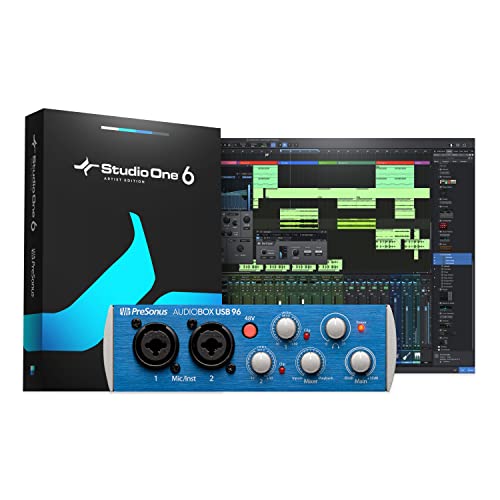
PreSonus AudioBox USB 96 ships with Studio One Artist — a serious DAW worth $94.99 on its own. For beginners who don't already own recording software, this bundle is exceptional value. PreSonus's hardware is well-regarded and the company is known for its educational resources and customer support.
Great for: Beginners who need both interface AND DAW software included. Windows PC users (PreSonus has strong Windows support). Budget-conscious creators who can't afford Focusrite + separate DAW software. Not ideal if: You already own DAW software (Logic, Ableton, etc.) — the bundled software advantage disappears.
Head-to-Head Specs
| Feature | Focusrite Scarlett Solo 4th Gen | PreSonus AudioBox USB 96 |
|---|---|---|
| Inputs | 1 XLR/TRS combo, 1 instrument | 2 XLR/TRS combo |
| Outputs | Monitor outs + headphone | Monitor outs + headphone |
| Sample Rate | 192kHz / 24-bit | 96kHz / 24-bit |
| Air Mode | Yes | No |
| Bundled DAW | Ableton Live Lite | Studio One Artist |
| Preamp Quality | Class-leading for price | Excellent |
| Price | ~$119 | ~$94.99 |
Preamp Quality: Focusrite Wins
The Scarlett 4th Gen preamps are the reference standard in their price class. The Air mode is genuinely useful for vocal recording — a subtle high-frequency enhancement that adds clarity without EQ. Multiple blind tests by recording communities consistently place Focusrite preamps above PreSonus at equivalent price points.
Software Bundle: PreSonus Wins
Studio One Artist is a full-featured DAW (not a lite version) worth ~$99. Ableton Live Lite (included with Focusrite) is more limited. For complete beginners who have no DAW, PreSonus's bundle represents better total value.
The 2i2 Upgrade Path
If you're comparing and think you might record two sources (interview podcast, two instruments, vocal + guitar), the Focusrite Scarlett 2i2 is better value than both solo interfaces. Two inputs with Focusrite preamp quality for ~$60 more than the Solo.
Bottom Line
Focusrite Scarlett Solo for better preamp quality and maximum compatibility. PreSonus AudioBox USB 96 if you need DAW software included and the Studio One workflow appeals to you.
Watch Before You Buy


“The most recommended audio interface for 10+ years. Best preamp quality for the money, massive community support.”
See Today’s Price →What we like
- Best-in-class preamp quality for the price
- Air mode emulates transformer preamp character
- 192kHz/24-bit recording
- Largest home recording community and resources
Watch out for
- Only 1 XLR input — not for recording two sources simultaneously
- Ableton Live Lite bundled DAW is limited
Read Full Analysis
Focusrite Scarlett Solo 4th Gen USB Audio Interface is the world's bestselling audio interface — the single-input, two-output configuration handles one microphone and one instrument simultaneously, covering the standard solo recording setup for podcasters, singer-songwriters, and home producers. The 4th Gen Air mode adds a transformer-like presence boost to the mic preamp, improving the vocal recording quality for condenser microphones. The Scarlett Solo ships with a year of Ableton Live Lite, Focusrite's Hitmaker Expansion plugin bundle, and pro tools first — providing software value that significantly exceeds the hardware cost. Against PreSonus AudioBox USB 96, Focusrite Scarlett Solo 4th Gen's preamp quality improvements in the Air mode and the comprehensive software bundle provide a compelling upgrade over the previous generation and competitive alternatives. For solo artists, podcasters, and home producers starting with one microphone and one instrument input, the Scarlett Solo 4th Gen is the default recommendation.
“The best-selling audio interface in the world. Two Focusrite preamps plus Air mode for under $200 is exceptional value.”
See Today’s Price →What we like
- Two inputs — record vocal + instrument simultaneously
- Focusrite 4th Gen preamps on both inputs
- Air mode and gain halo metering
- Best-selling audio interface worldwide
Watch out for
- More expensive than Solo and AudioBox
- Two inputs more than single podcasters need
Read Full Analysis
Focusrite Scarlett 2i2 4th Gen USB Audio Interface is the two-input version of the Scarlett lineup — providing two mic/line inputs with independent gain controls and the 4th Gen Air mode on both channels for capturing two sources simultaneously. For singer-guitarists who want to record voice and guitar simultaneously through separate inputs for independent mixing, the 2i2 is the recommended step up from the Solo. The Air mode's transformer-like presence enhancement is available on both inputs. Against PreSonus AudioBox USB 96 at similar pricing, Focusrite Scarlett 2i2 4th Gen competes directly — both provide two inputs at comparable prices with different bundled software (Ableton vs. Studio One). The 2i2's consistent top review rankings in audio production media reflect its reliable preamp performance, low latency monitoring, and the Focusrite ecosystem's comprehensive software bundle. For home producers who need two simultaneous inputs, the 2i2 4th Gen is the most recommended entry-level dual-input interface.
“Two inputs and Studio One Artist included. The complete starter kit for beginners who need everything in one box.”
See Today’s Price →What we like
- Two XLR/TRS combo inputs — record two sources
- Studio One Artist DAW fully included
- 96kHz/24-bit recording
- Solid build quality with metal chassis
Watch out for
- No Air mode equivalent
- Studio One software may be unfamiliar to beginners
- Slightly older design vs Scarlett 4th Gen
Read Full Analysis
PreSonus AudioBox USB 96 Audio Interface is the reliable alternative to the Focusrite Scarlett in the entry-level interface market — two combo XLR/TRS inputs allow simultaneous recording of two microphones or instruments, providing one additional input channel over the Scarlett Solo at a comparable price. The Studio One Artist DAW bundled with AudioBox USB 96 is a full-featured recording application that provides more comprehensive functionality than Ableton Live Lite's session-view limitations. The 96kHz sample rate supports high-resolution audio capture. Against Focusrite Scarlett Solo, PreSonus AudioBox's dual-input configuration is an advantage for collaborative recording or singer-guitarists who want to record voice and instrument simultaneously. PreSonus's vertical integration (they make both the hardware and Studio One DAW) provides technical support continuity between the interface and recording software. For recording two sources simultaneously, the AudioBox USB 96's second input provides immediately practical value over the single-input Scarlett Solo.
Frequently Asked Questions
Do I need an audio interface for podcasting?
Is Focusrite Scarlett Solo good enough for professional recording?
What's the difference between Scarlett Solo and Scarlett 2i2?
Can I use a Focusrite or PreSonus interface on Mac and Windows?
What microphone should I pair with a Focusrite Scarlett Solo?
How We Chose These Products
We compare each product’s Amazon listing, the manufacturer’s published specifications and Amazon customer ratings, shown with their review counts as Amazon’s data, and rank the products on how well they answer this page’s question. We do not test products in hand and we do not run our own analysis of review text. A publication or expert is named only where we cite its published findings about that product. No manufacturer paid for placement on this page.
A price appears only when Amazon’s API supplied it at a recent daily refresh, with the date and time beside it, and is withdrawn at 4 AM Central on the day after it turns 24 hours old; otherwise use “Check price on Amazon” for the live price. Read our full methodology →