Guitar Amp Buying Guide: Watts, Tubes vs. Solid State, and Combo vs. Stack (2026)
For home practice: a 1-15 watt combo amp is all you need — the Fender Blues Junior (15W, $500) for tube tone or Fender Champion 20 (20W solid state, $130) for versatility. Gigging musicians need 30-50 watts for tubes (which need volume to saturate) or 50-100W solid state. Never buy more watts than your context requires — bedroom players don't need 100W heads.
At a Glance
| # | Product | Award | Price |
|---|
Guitar Amp Buying Guide Buying Guide
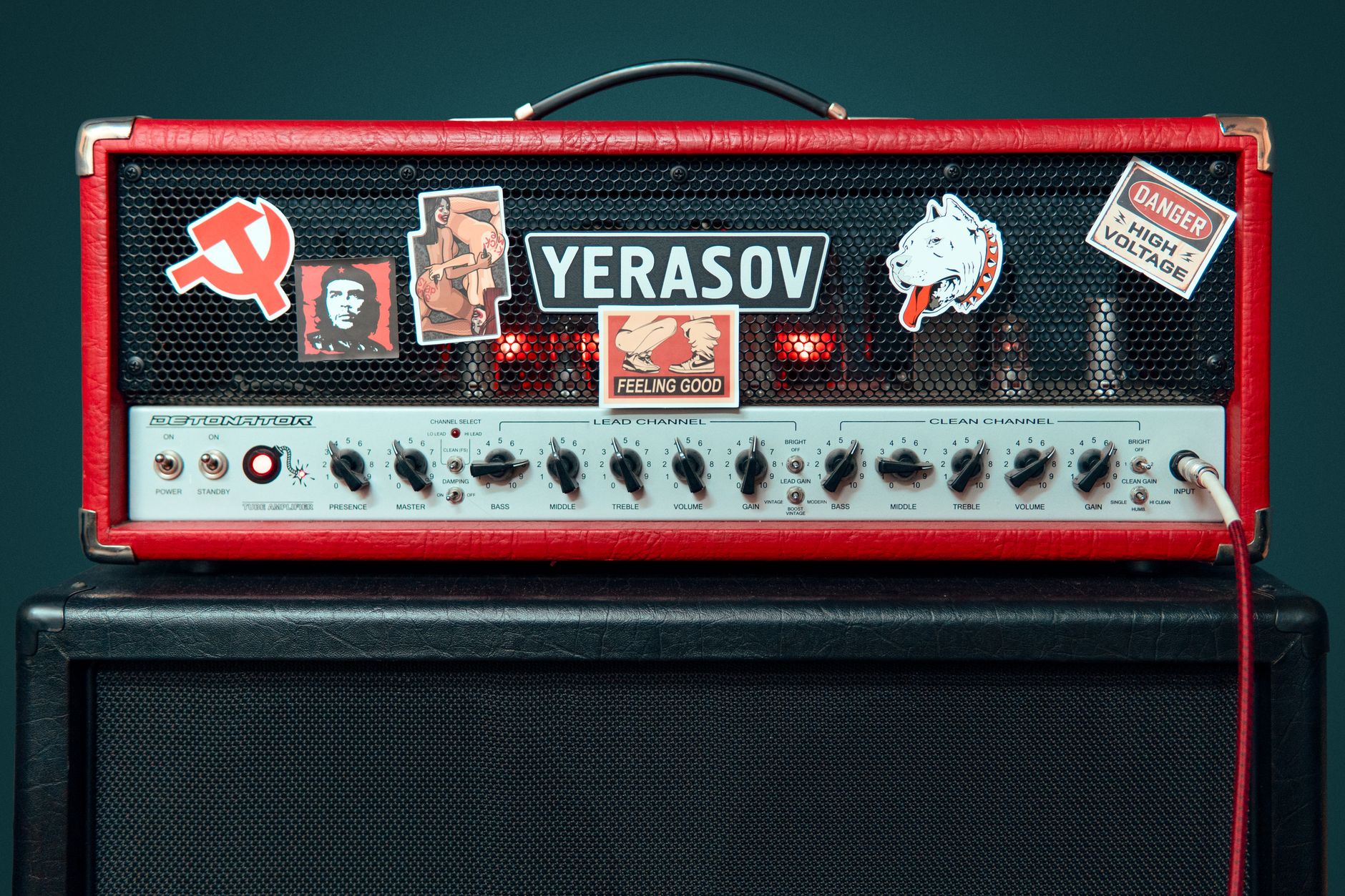 Photo by Dmitry Demidov / Pexels
Guitar amplifier wattage is the most misleading spec in music retail. A 100W amp is not "louder" in any practical sense at home — it's the same volume as a 50W amp at half the volume knob. Understanding watts, tube behavior, and appropriate sizing for context prevents the most common amp-buying mistakes.
Wattage: What It Actually Means
Wattage determines maximum volume potential, not volume at any given setting. The human ear perceives loudness logarithmically: you need 10x the wattage to sound twice as loud. A 100W amp is only about 3dB louder than a 50W amp at maximum volume — barely perceptible. The practical wattage guide:
1-5W: Bedroom practice. More than enough for home volume. Class A single-ended tube amps in this range often produce the best tube saturation at low volumes. Fender Champ, Vox AC4.
10-20W: Practice amp with some headroom for small acoustic spaces. Can be used for very small gigs. Fender Blues Junior (15W), Vox AC15.
30-50W: The gigging standard for small to medium venues. Tube amps in this range balance clean headroom with accessible saturation. Fender Hot Rod Deluxe (40W), Marshall DSL40 (40W).
100W: Large venue or outdoor gigging without PA support. Overkill for 95% of guitarists. Almost never run at full volume.
Tubes (Valve) vs. Solid State
Tube amplifiers: Use vacuum tubes (valves) as the active amplification element. The defining characteristic: tubes compress and harmonically distort as they're pushed toward saturation, producing an organic, warm overdrive that's been the benchmark of electric guitar tone since the 1950s. Tube amps require warmup time (5-10 minutes), occasional tube replacement (every 2-5 years, $50-150 for a set), and more physical care. They're heavier and more fragile than solid state. Why players choose them: the dynamic response — playing softly produces clean tone; playing hard drives the tubes into natural overdrive. This touch-sensitivity is difficult to fully replicate electronically. Solid state amplifiers: Use transistors for amplification. More reliable, lighter, never need tube replacement, and are consistent regardless of warmup time. Sound character: cleaner at all volumes, less harmonic "bloom," more clinical. Modern solid state amps (Fender Champion series, Boss Katana) use digital modeling to approximate tube behavior convincingly enough for most practice and many gigging situations. Modeling amps: Solid state amps with DSP that emulates specific amplifier models (often 100+ amp models in one unit). The Line 6 Helix, Fender Tone Master, and Boss Katana represent modern modeling quality. For bedroom players who want versatility: modeling is the practical winner. For tone purists: a quality tube amp in the correct wattage range.
Combo vs. Head + Cabinet
Combo amplifiers: Amplifier and speaker in one cabinet. The standard for most guitarists. Self-contained, portable, one unit to transport. Vox AC30, Fender Blues Junior, Marshall DSL20CR — all combos. Head + Cabinet: Separate amplifier head and speaker cabinet, connected by a speaker cable (not an instrument cable — this is a critical distinction). More flexible: one head can drive different cabinets (1x12 for small gigs, 4x12 for large stages). More power in a separates configuration. Required for achieving the classic "full stack" (head + two 4x12 cabinets) Marshall look that has defined rock stages. More complex to transport. For most players: a combo is simpler and sufficient. Head + cabinet makes sense when you need configuration flexibility or specific tones from certain speaker/head combinations.
Speaker Size and Character
Speaker size significantly affects tone character:
8-inch speakers: Punchy, midrange-focused, small. Common in practice combos. Limited low-end extension.
10-inch speakers: The Fender clean sound. Used in tweed-era Fenders. Bright, clear, fast transient response.
12-inch speakers: The dominant guitar speaker size. Full low-end, smooth highs. Used in most gigging amplifiers. Celestion Vintage 30 and Celestion Greenback are the two most iconic 12-inch speakers for rock.
Speaker brand matters: the "Fender clean" tone uses Jensen or Eminence speakers; the "British" Marshall crunch uses Celestion speakers. Replacing the stock speaker in a combo amp is one of the most cost-effective tone upgrades available ($50-100 for a quality replacement vs. $400+ for a new amp).

What We Recommend
Home practice (no gigging): Fender Champion 20 ($130) — 20W solid state with built-in effects, versatile, no tube maintenance. Budget tube: Bugera V5 Infinium ($150) — 5W tube amp that sounds better at bedroom volumes than higher-watt tube amps. First gigging amp: Fender Blues Junior ($500) — 15W tube combo that covers blues, rock, and country and holds its own in small venue performances. Modeling for versatility: Boss Katana 50 MkII ($200) — the most reviewed beginner-to-intermediate modeling combo. See our best guitar amps for beginners and best beginner guitars for specific picks.
How We Analyze Products
We analyze Amazon review data — often thousands of reviews per product — to surface patterns that individual buyers miss. Our process aggregates star ratings, review counts, and buyer sentiment at scale, identifying which strengths and weaknesses appear consistently across the largest review samples available.
Each product earned its placement through data: total review volume, average rating, and the specific praise and complaints that repeat most often across buyers. No manufacturer paid for placement on this page. Products appear here because buyers endorsed them at scale, not because a company asked us to feature them.
We use AI to summarize review sentiment — not to fabricate opinions, but to condense what thousands of buyers actually wrote into a readable format. The pros and cons you see reflect the most common themes found in verified purchaser reviews, paraphrased for clarity. We do not claim to have accessed Reddit, YouTube, or specific publications in generating these summaries.
Prices shown reflect Amazon pricing at the time this page was last generated. Click “See Today’s Price” to get the current live price on Amazon. Read our full methodology →