Best Snowshoes for Beginners 2026: Aluminum & Lightweight

The MSR Evo Trail ($185) is the best beginner snowshoe — steel crampons grip ice while the 22-inch frame supports up to 200 lbs on packed and powder trails.
See Today’s Price →At a Glance
| # | Product | Award | Price | Our Score | |
|---|---|---|---|---|---|
| 1 | 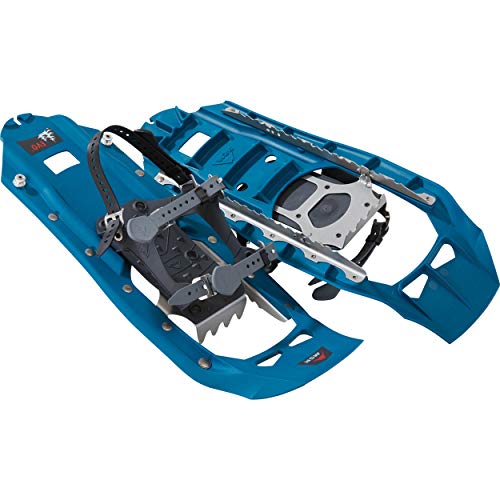 MSR Evo Trail 22 Inch Hiking Snowshoes … MSR Evo Trail 22 Inch Hiking Snowshoes … |
Best Overall | $185 | 9.2 | Buy → |
| 2 |  Tubbs Mens Flex RDG Day Hiking Snowshoes Tubbs Mens Flex RDG Day Hiking Snowshoes |
Best BOA Binding | $49 | 8.9 | Buy → |
| 3 |  MSR Evo Trail Backcountry and Trekking … MSR Evo Trail Backcountry and Trekking … |
Best Upgrade | $169 | 8.7 | Buy → |
| 4 |  Atlas Run Snowshoe 22 inch Atlas Run Snowshoe 22 inch |
Best Lightweight | $202 | 8.3 | Buy → |
Showing 4 of 4 products


Atlas Run Snowshoe 22 inch
“A dedicated running snowshoe for winter trail runners who train through snow season. The compact, lightweight frame and secure binding maintain running gait without the bulk of recreational snowshoes.”
See Today’s Price →What we like
Watch out for
Read Full Analysis
The Atlas Run 22-inch is a running-specific snowshoe built for winter trail runners who maintain training through snow season rather than recreational snowshoers who hike trails. The distinction matters: recreational snowshoes are wide, stable, and optimized for walking efficiency; running snowshoes are narrower and lighter to maintain a natural running gait without the lateral waddle that wide recreational frames force. The V-frame design reduces frame-to-leg contact during the run cycle, minimizing bruising on the ankles and calves that wider frames produce over multiple miles. The traction crampons handle packed and moderate icy conditions on trail. At $202, it is the most expensive option in this comparison. The 22-inch size is rated to approximately 175 lbs for running use — heavier users sink in soft snow and lose the flotation the frame is designed to provide. For recreational snowshoers who walk trails, the MSR Evo Trail at $170-185 is more appropriate and better value. The Atlas Run is the right purchase only for trail runners who specifically need to maintain their running training through winter conditions.
Snowshoes for Beginners Buying Guide
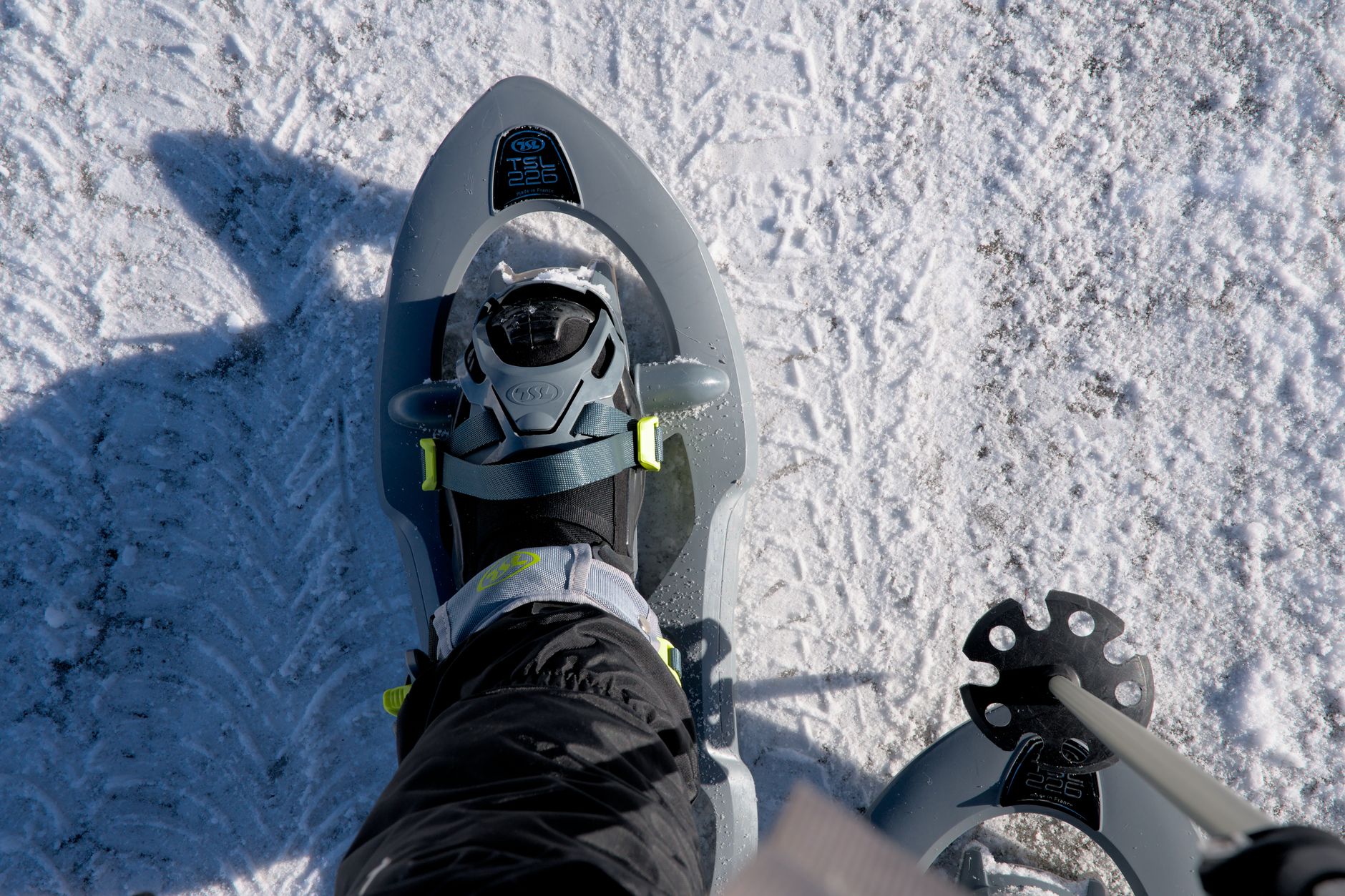 Photo by Jean-Paul Wettstein / Pexels
Best Snowshoes for Beginners: Tubbs Flex NRG or MSR Evo Trail
For first-time snowshoers on groomed and packed trails: the Tubbs Flex NRG at $100-120 is the beginner-friendly snowshoe with a flexible deck that mimics a more natural walking gait than rigid frame designs — important for new users who are adjusting to the wider stance snowshoes require. The binding is intuitive to put on and take off with cold, gloved hands. For beginners who anticipate graduating to more varied terrain: the MSR Evo Trail at $120-140 uses a more robust aluminum frame with better traction rails that remain useful as skills develop. Either choice is appropriate for the typical beginner's first 5-10 snowshoe outings on established winter trails.
What Beginners Actually Need
Snowshoe selection for beginners comes down to three factors: binding simplicity, appropriate size for body weight, and traction for the expected terrain. Binding simplicity matters most when temperatures are below 20°F and fingers are numb — a binding that requires fine motor control to cinch becomes a genuine problem on cold days. Size selection follows manufacturer weight charts; undersized snowshoes result in postholing (punching through the snow) which defeats the purpose. Most beginner trails are packed by prior use, requiring only moderate traction — aggressive crampon designs used in backcountry snowshoes are unnecessary and add weight.
Flat Terrain vs. Rolling Terrain Snowshoes
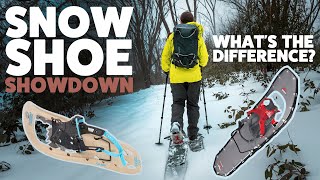
Recreational/flat terrain (Tubbs Flex NRG, Atlas Run): Rounded toe, moderate aluminum frame, basic traction crampon. Best for groomed trails, flat open fields, and gentle rolling terrain. Lightest weight, easiest to use. Appropriate for 90% of beginner outings.
Rolling/backcountry (MSR Evo Trail, Atlas Aspect): More aggressive traction, sturdier frame, heel lifter bars for sustained climbs. The step-up when beginners venture onto ungroomed terrain, steeper hills, and mixed conditions. Heavier but more capable across conditions.
Beginner recommendation: start with recreational snowshoes and upgrade when the terrain limitations become apparent — most beginners stay on recreational terrain indefinitely.
The Bottom Line
Tubbs Flex NRG for beginners on groomed and packed trails at $110. MSR Evo Trail for beginners who anticipate progressing to varied terrain at $130. Rent before buying for the first outing — most ski resorts and outdoor shops rent snowshoes for $20-30/day, which allows you to verify the activity is enjoyable before purchasing. Trekking poles improve balance significantly on snowshoes — pack them if you have them.
Related Guides
Frequently Asked Questions
What size snowshoes do I need?
Are snowshoes easy for beginners?
Do I need poles for snowshoeing?
Can I use regular winter boots with snowshoes?
How much do quality beginner snowshoes cost?
How We Analyze Products
We analyze Amazon review data — often thousands of reviews per product — to surface patterns that individual buyers miss. Our process aggregates star ratings, review counts, and buyer sentiment at scale, identifying which strengths and weaknesses appear consistently across the largest review samples available.
Each product earned its placement through data: total review volume, average rating, and the specific praise and complaints that repeat most often across buyers. No manufacturer paid for placement on this page. Products appear here because buyers endorsed them at scale, not because a company asked us to feature them.
We use AI to summarize review sentiment — not to fabricate opinions, but to condense what thousands of buyers actually wrote into a readable format. The pros and cons you see reflect the most common themes found in verified purchaser reviews, paraphrased for clarity. We do not claim to have accessed Reddit, YouTube, or specific publications in generating these summaries.
Prices shown reflect Amazon pricing at the time this page was last generated. Click “See Today’s Price” to get the current live price on Amazon. Read our full methodology →