Alexa vs Google Home (2026)

Amazon Echo wins for smart home control — Alexa has the largest library of compatible devices and skills. Google Nest wins for Google ecosystem users and for questions that need accurate, real-time information since Google's search integration is superior.
See Today’s Price →At a Glance
| # | Product | Award | Price | Power | Dimensions | Connectivity | Our Score | |
|---|---|---|---|---|---|---|---|---|
| 1 | 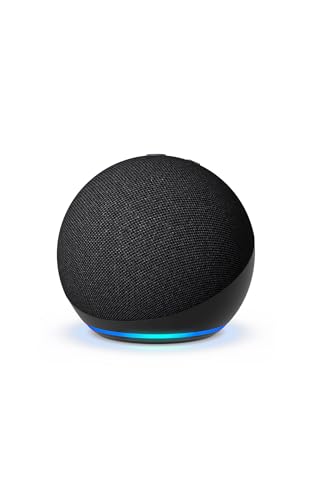 Echo Dot 5th Gen Echo Dot 5th Gen |
Best Overall | $39 | 15W adapter (included) | 3.9 x 3.9 x 3.5 inches | Wi-Fi 2.4/5 GHz, Bluetooth 5.0 | 9.2 | Buy → |
| 2 |  Google Nest Hub (2nd Gen) 7-inch Smart … Google Nest Hub (2nd Gen) 7-inch Smart … |
Best Smart Display | $154 | — | — | — | 8.9 | Buy → |
| 3 | 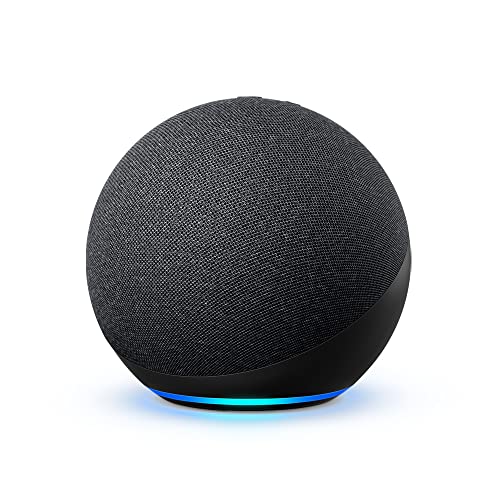 Amazon Echo (4th Gen) with built-in Zig… Amazon Echo (4th Gen) with built-in Zig… |
Best Premium Echo | $99 | — | — | — | 8.5 | Buy → |
| 4 |  Google Nest Mini (2nd Gen) Smart Speaker Google Nest Mini (2nd Gen) Smart Speaker |
Best Budget Google | $29 | — | — | — | 8.2 | Buy → |
Showing 4 of 4 products
Echo Dot 5th Gen
“The Echo Dot 5th Gen is the ideal Alexa smart home starting point. It delivers full hub capabilities, a useful temperature sensor, and improved audio in a compact $49.99 package that belongs in every ”
See Today’s Price →What we like
- Full Alexa smart home hub capabilities including device control, routines, and groups
- Built-in temperature sensor enables temperature-triggered automations
- Noticeably improved speaker quality over the 4th Gen Echo Dot
- Tap gesture on the top of the device for snooze and volume control
- Eero Wi-Fi enabled for smart home device bridging on compatible networks
Watch out for
- Speaker is not a substitute for a dedicated Bluetooth speaker at higher volumes
- Requires constant power via the included adapter — not battery-operated
- Screen-free design means no visual feedback for Ring doorbell or recipe displays
Read Full Analysis
The Amazon Echo Dot (5th Gen) is Amazon's most accessible Alexa device—the compact puck-sized smart speaker with Alexa's full functionality at the entry price point. The 5th Gen Echo Dot adds an onboard temperature sensor (enables temperature routines and monitoring without a separate smart sensor) and improved audio over the 4th Gen. At $29–50, the Echo Dot is the recommended Alexa starting point for new smart home users. Alexa's ecosystem depth is the Echo Dot's functional underpinning—thousands of compatible smart home devices, skills (third-party voice app extensions), and native integration with Amazon services (shopping, Prime Video, Kindle reading) make the Dot a smart home hub interface at minimum speaker quality investment. Alexa's shopping, reminders, and briefing features integrate with Amazon account services in ways Google Home doesn't match for Amazon-heavy households. Against Google Nest on this comparison page, Echo Dot is the Amazon ecosystem choice—best for households that shop regularly on Amazon, use Prime services extensively, and have Alexa-compatible smart home devices. Google Nest Mini competes at the same price tier with better natural language understanding for information queries and Google services integration. The ecosystem each household is already invested in (Amazon or Google) is the primary decision driver.

Google Nest Hub (2nd Gen) 7-inch Smart Display
“The Google Nest Hub 2nd Gen transforms any counter into a smart command center, with sleep tracking and visual Assistant responses setting it apart from smart speakers.”
See Today’s Price →What we like
- 7-inch touchscreen for visual responses and recipes
- Sleep tracking with Soli radar sensor
- Google Photos digital frame mode
- Google Assistant with screen support
Watch out for
- No camera for video calls
- Cannot run third-party Android apps
- Requires outlet — not portable
Read Full Analysis
The Google Nest Hub (2nd Gen) 7-Inch Smart Display is Google's combined smart display and assistant device—a 7-inch touchscreen with Google Assistant for visual content display (YouTube, Google Photos, video calls, recipe cards) alongside voice command functionality. The smart display format adds the visual interaction layer that pure voice speakers (Echo Dot, Nest Mini) don't provide. The sleep sensing feature (using radar, no camera) tracks sleep patterns and provides insights without the privacy concern of a bedroom camera. The ambient mode displays photos from Google Photos or Google Clock during idle periods. Against Amazon's Alexa devices on this page, Google Nest Hub's smart display format and Google Assistant's knowledge base depth are the differentiators—Google Assistant's information retrieval accuracy and depth are consistently rated higher than Alexa's for complex queries, web searches, and knowledge questions. For households who want a kitchen counter display for recipe guidance, video calls, and visual smart home control, the Nest Hub provides capabilities that a voice-only Echo Dot doesn't offer.

Amazon Echo (4th Gen) with built-in Zigbee Hub
“The Echo 4th Gen is the best smart home hub for most people — built-in Zigbee hub, Alexa voice control, Matter compatibility, and excellent audio in one device that replaces a separate hub purchase.”
See Today’s Price →What we like
- Built-in Zigbee hub (no extra hardware)
- Alexa voice control
- Matter support
- Excellent device compatibility
- Premium audio speaker
Watch out for
- Requires Amazon account
- No Z-Wave support
Read Full Analysis
The Amazon Echo (4th Gen) with Built-In Zigbee Hub is Amazon's full-size Alexa smart speaker—the spherical 4th Gen design with better audio quality than the Dot and the built-in Zigbee smart home hub that eliminates the need for a separate bridge to connect Zigbee-protocol smart devices (Philips Hue without a bridge, IKEA Trådfri, and other Zigbee devices). The hub integration consolidates smart home infrastructure in the speaker itself. At $89–99, the Echo 4th Gen is the smart home hub investment for households planning to add multiple Zigbee-protocol smart devices without purchasing separate hub hardware. The improved audio quality (compared to Echo Dot) provides meaningful music listening quality upgrade alongside the hub functionality. Against Google Nest Hub (2nd Gen) at comparable pricing, the Echo with Zigbee Hub offers audio quality and smart home hub integration versus the Nest Hub's touchscreen display. For households building Zigbee-heavy smart home infrastructure, the Echo's integrated hub eliminates bridge purchases for each Zigbee product line. For households who want visual display alongside smart home control, the Nest Hub's touchscreen serves that specific use case.

Google Nest Mini (2nd Gen) Smart Speaker
“The Google Nest Mini is the affordable entry point to the Google smart home ecosystem, excelling at quick answers and Google Calendar integration.”
See Today’s Price →What we like
- Compact design fits anywhere
- Google Assistant with broad knowledge base
- Wall-mountable with built-in socket mount
- Improved bass over 1st gen
Watch out for
- Limited smart home device support vs Alexa
- No 3.5mm audio out
- Requires Wi-Fi, no Bluetooth streaming from phone
Read Full Analysis
The Google Nest Mini (2nd Gen) Smart Speaker is Google's entry-level smart speaker—the direct Echo Dot competitor at the same $29–50 price tier with Google Assistant's voice recognition and knowledge base instead of Alexa's ecosystem and shopping integration. The Nest Mini's wall mount capability and magnetic charging (on some configurations) enable placement flexibility that the Echo Dot's flat base doesn't offer. Google Assistant on the Nest Mini consistently answers complex knowledge questions, local information queries, and follow-up questions with more accuracy than Alexa in independent testing. For households who primarily use their smart speaker for information queries, music playback, and home control rather than Amazon shopping integration, the Nest Mini's assistant quality makes it the recommended starting point. Against Echo Dot on this page, the Nest Mini and Echo Dot are the entry smart speaker comparison—Google's knowledge depth and natural conversation versus Amazon's shopping integration and ecosystem breadth. For Google-centric households (Android, Gmail, Google Calendar, Chromecast), Nest Mini's native integration is the logical choice. For Amazon-centric households (Prime, Fire TV, Amazon shopping), Echo Dot is the natural home speaker.
Alexa vs Google Home (2026) Buying Guide
Our Top Pick
Echo Dot 5th Gen at $39.99 — Echo Dot 5th Gen packs powerful sound and Alexa into a hockey-puck sized device.
Budget Pick: Amazon Echo with built-in Zigbee Hub at $39.99 — Echo 4th Gen delivers room-filling 360-degree sound and serves as a Zigbee smart home hub.
Great for: Smart home enthusiasts who want voice control, people with mobility limitations, and anyone with multiple smart devices to unify
Not ideal if: You only have one or two smart devices — controlling them from an app is simpler than adding a hub to the mix
Related Guides
Who This Is For
What to Look For
- Core performance: The most important spec for alexa vs google home is often obscured by brand marketing. Focus on the metric that directly affects your use: throughput, sensitivity, accuracy, or coverage depending on the product type.
- Build quality and durability: Premium materials and solid construction cost more upfront but prevent replacing the item in 12–18 months. Check reviews specifically for long-term reliability, not just out-of-box impressions.
- Compatibility: Before buying, confirm your alexa vs google home works with your existing setup — operating system, device ports, existing ecosystem, and any required software or subscriptions.
- Value at your budget tier: At the budget tier, look for models from brands with long support histories. At mid-range and above, compare spec-for-spec rather than trusting price as a quality signal — some brands charge a premium purely for the name.
Common Mistakes to Avoid
- Buying based on the spec sheet rather than real-world reviews — advertised specs are measured under ideal conditions that rarely match typical use.
- Ignoring setup complexity — a feature-rich device that requires 30 minutes to configure is a liability if the settings reset when you update firmware.
- Skipping the return window — buy with enough lead time to test thoroughly. A unit that works perfectly for 2 days may reveal problems by day 10.
Watch Before You Buy
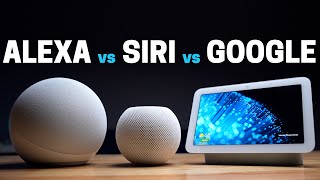
Frequently Asked Questions
Which is smarter, Alexa or Google Assistant?
Can Alexa and Google Home work in the same house?
Which smart speaker sounds better?
Is Alexa or Google better for shopping?
Which platform protects privacy better?
How We Analyze Products
We analyze Amazon review data — often thousands of reviews per product — to surface patterns that individual buyers miss. Our process aggregates star ratings, review counts, and buyer sentiment at scale, identifying which strengths and weaknesses appear consistently across the largest review samples available. The 337,893+ reviews analyzed on this page represent real verified-purchase feedback from Amazon buyers.
Each product earned its placement through data: total review volume, average rating, and the specific praise and complaints that repeat most often across buyers. No manufacturer paid for placement on this page. Products appear here because buyers endorsed them at scale, not because a company asked us to feature them.
We use AI to summarize review sentiment — not to fabricate opinions, but to condense what thousands of buyers actually wrote into a readable format. The pros and cons you see reflect the most common themes found in verified purchaser reviews, paraphrased for clarity. We do not claim to have accessed Reddit, YouTube, or specific publications in generating these summaries.
Prices shown reflect Amazon pricing at the time this page was last generated. Click “See Today’s Price” to get the current live price on Amazon. Read our full methodology →