Best 3D Printer for Beginners (2026)

The Official Creality Ender 3 V3 SE 3D Printer is our top pick for 3D Printer for Beginners. Budget price makes FDM 3D printing accessible for first-time users. For budget shoppers, the Creality Ender 3 V3 SE 3D Printer offers solid value at a lower price.
See Today’s Price →At a Glance
| # | Product | Award | Price | Asin | Item Weight | Manufacturer | Our Score | |
|---|---|---|---|---|---|---|---|---|
| 1 |  Official Creality Ender 3 V3 SE 3D Printer Official Creality Ender 3 V3 SE 3D Printer |
Best Overall | $186 | B0CD1KWF1G | 16.17 pounds | Creality 3D | 9.2 | Buy → |
| 2 |  Bambu Lab A1 Mini 3D Printer Bambu Lab A1 Mini 3D Printer |
Best Plug-and-Play | $280 | B0CRYJBKQQ | 17.82 pounds | Shenzhen Tuozhu Technology Co., Ltd | 8.9 | Buy → |
| 3 |  ELEGOO Neptune 4 Pro 3D Printer ELEGOO Neptune 4 Pro 3D Printer |
Best Mid-Range | $332 | B0C749177C | 19.6 pounds | ELEGOO | 8.5 | Buy → |
| 4 |  AnkerMake M5C 3D Printer AnkerMake M5C 3D Printer |
Best Auto-Everything | $438 | B0C2HMQB15 | 20.9 pounds | Anker | 8.2 | Buy → |
| 5 |  Bambu Lab P1S 3D Printer Bambu Lab P1S 3D Printer |
Best Speed Upgrade | $419 | B0DMQ6M182 | 28.5 pounds | Bambu Lab | 7.8 | Buy → |
| 6 | Creality Ender 3 V3 SE 3D Printer |
Best Proven Budget | $186 | B0CD1KWF1G | 16.17 pounds | Creality 3D | 7.5 | Buy → |
Showing 6 of 6 products
Official Creality Ender 3 V3 SE 3D Printer
“Best budget 3D printer under $200. The Ender 3 V3 SE packs auto-leveling and a direct extruder into a beginner-friendly package at a price that undercuts every serious competitor.”
See Today’s Price →What we like
- Budget price makes FDM 3D printing accessible for first-time users
- Large print volume accommodates most hobby and functional print projects
- Active Creality community provides an extensive library of upgrades and tutorials
- Auto leveling on the V3 SE reduces the most common beginner frustration
- Compatible with standard PLA filament widely available from many brands
Watch out for
- Smaller community than original Ender 3
- Stock firmware less polished than Klipper alternatives
Read Full Analysis
The Creality Ender 3 V3 SE ($219.00) is the best 3D printer for beginners who want to learn FDM printing without fighting their machine. Automatic bed leveling via a CR Touch probe handles the most frustrating part of 3D printing setup — manual tramming — by measuring 16 points across the build surface and creating a compensation mesh that ensures first layers adhere correctly on every print. Print speeds up to 250mm/s dramatically reduce wait times versus older 3D printers. The 220x220x250mm build volume covers most beginner project sizes. The Ender 3 community is the largest in consumer FDM printing: thousands of tutorials, upgrade guides, and troubleshooting threads exist specifically for this machine. Creality Slicer (based on Cura) works out of the box. The honest trade-off: the Ender 3 V3 SE requires some assembly (estimated 30-60 minutes), and quality control across units has historically been inconsistent — occasional hardware issues at delivery are more common than on premium printers. For cost-conscious beginners willing to invest some learning time, the V3 SE delivers tremendous printing capability at a beginner-friendly price.

Bambu Lab A1 Mini 3D Printer
“Best compact 3D printer for beginners and makers. The A1 Mini delivers Bambu Lab's proven speed and reliability in a smaller footprint, with full-auto calibration that makes first prints virtually foo”
See Today’s Price →What we like
- Multi-color AMS system prints in up to four colors automatically without filament swapping
- Auto bed leveling eliminates manual calibration for beginners
- Fast print speeds reduce wait time on complex multi-hour prints
- Bambu Lab active community and slicer software make setup straightforward
- Compatible with a wide range of PLA, PETG, and TPU filament types
Watch out for
- Smaller 180x180x180mm build volume than rivals
- Bambu ecosystem lock-in for multi-color
Read Full Analysis
The Bambu Lab A1 Mini ($239.00) represents a fundamentally different philosophy from other printers in this comparison: it prioritizes printing results over learning experience. From first power-on, the A1 Mini auto-calibrates, slices with Bambu's purpose-built software, and produces quality results with minimal intervention. The vibration compensation system eliminates ringing artifacts that plague faster FDM printers, enabling high speeds without quality degradation. Bambu Studio slicer is polished and regularly updated. The Core XY motion system provides precise, repeatable positioning. For beginners who want objects rather than a printer project — who would rather focus on design and output than dialing in hardware — the A1 Mini's reliability and ease-of-use premium is absolutely worth the modest price difference versus budget alternatives. The honest limitation: the A1 Mini is more of a closed ecosystem than open-source Creality alternatives — third-party modification and firmware customization are more restricted, which matters to makers who want to deeply understand and modify their machines but is irrelevant to most beginners.

ELEGOO Neptune 4 Pro 3D Printer
“Best mid-range speed demon. The Neptune 4 Pro runs Klipper out of the box, hitting 500mm/s with better print quality than you'd expect for the price.”
See Today’s Price →What we like
- High-speed printing reduces print times significantly vs standard-speed printers
- Direct drive extruder handles flexible filaments like TPU without jamming
- Large build volume covers bigger prints than compact desktop printers
- Input shaping and vibration compensation improve quality at high speeds
- ELEGOO Neptune community provides active support and upgrade resources
Watch out for
- Klipper learning curve for new users
- Build quality feels slightly plasticky vs Bambu
Read Full Analysis
The ELEGOO Neptune 4 Pro ($349.99) is the mid-range choice for beginners who already know they'll outgrow entry-level machines. Klipper firmware — the same software used on high-end professional printers — runs on the Neptune 4 Pro, providing advanced features like pressure advance and input shaping that improve print quality at speed in ways that older Marlin-based printers can't match. Print speeds are genuinely fast (rated 500mm/s, practically effective at 250-300mm/s for quality work). The direct drive extruder handles flexible filaments like TPU that Bowden-drive printers struggle with. At 256x256x256mm, the build volume is larger than entry-level alternatives. Klipper also enables remote monitoring via a web interface. The trade-off: Klipper has a steeper learning curve than simpler firmware — more configuration options mean more potential confusion for absolute beginners. If you're new to 3D printing and just want to start making things, the Ender 3 V3 SE or Bambu A1 Mini are better starting points. If you've already identified FDM printing as a long-term hobby, the Neptune 4 Pro's Klipper foundation scales with your growing expertise.
AnkerMake M5C 3D Printer
“The AnkerMake M5C combines Bambu-level speed with a 300°C all-metal hotend for engineering materials — the best choice for PETG, ABS, and TPU printing at the $300 price point.”
See Today’s Price →What we like
- All-metal 300°C hotend handles engineering filaments (ABS, PETG, TPU)
- 500mm/s print speed with 7x7 auto-leveling
- App monitoring — watch prints remotely from your phone
- 220x220x250mm build volume
Watch out for
- More expensive than Creality at the same speed tier
- AnkerMake slicer less mature than Bambu
Read Full Analysis
The AnkerMake M5C 3D Printer ($449.00) targets beginners who want the simplest possible path to first successful prints. One-click printing from the companion app automates the workflow from model selection to print start, and fully automated calibration means you don't configure anything before your first session. Print quality is consistent across sessions once dialed in, and AnkerMake's cloud slicing option removes the need to install or learn desktop slicer software for basic projects. The 235x235x250mm build volume covers most hobbyist projects. At $449, it's the most expensive beginner-friendly machine in this roundup, which requires honest justification: the AnkerMake community is smaller than Creality's or Bambu's, meaning fewer community tutorials and troubleshooting resources when things go wrong. For buyers who truly want maximum simplicity and are comfortable paying a premium for it — particularly those who are not technical hobbyists and want an appliance rather than a maker tool — the M5C delivers. For most beginners, the Bambu A1 Mini provides comparable ease-of-use at $200 less.
Bambu Lab P1S 3D Printer
“The Bambu Lab P1S is the best professional 3D printer under $1,000 — the fully enclosed chamber with HEPA filtration makes it the only printer on this list you can run continuously in an office withou”
See Today’s Price →What we like
- Fully enclosed — prints ABS, ASA, PA, PC without warping
- 500mm/s with active vibration compensation
- Built-in HEPA + active carbon filtration for enclosed printing
- 256x256x256mm build volume
Watch out for
- $899 price — significant investment
- Most features are overkill for PLA-only users
Read Full Analysis
The Bambu Lab P1S ($449.00) is the enclosed, multi-material capable step-up from the A1 Mini, and the enclosure is the key differentiator. A fully enclosed build chamber maintains a stable temperature environment throughout printing, which is essential for engineering-grade materials like ABS, ASA, and carbon fiber-filled filaments that warp when exposed to ambient air temperature fluctuations. The P1S supports Bambu's AMS (Automatic Material System) for multi-filament printing, enabling multi-color and multi-material prints in a single session without manual filament swaps. Print speed is among the fastest available for consumer printers. For beginners, the P1S is genuinely overkill — most beginner projects use PLA or PETG that print reliably without an enclosure. Where it makes sense is for makers who already know they want to print functional parts in engineering materials, or who specifically want multi-color printing capability as a primary use case. If you're buying your first printer and aren't sure what you'll print, start with the Ender 3 or A1 Mini. If you're upgrading after outgrowing an open-frame printer, the P1S is the logical destination.
Creality Ender 3 V3 SE 3D Printer
“The Creality Ender 3 V3 SE is the best budget 3D printer — CR Touch auto-leveling eliminates the biggest frustration of entry-level printing at a price under $200.”
See Today’s Price →What we like
- CR Touch auto-leveling — no manual bed tramming
- Sprite direct drive extruder handles flexible filaments
- 250mm/s print speed (fast for the price)
- 220x220x250mm build volume — standard desktop size
Watch out for
- Requires assembly (30–60 min)
- Open frame — no enclosure for ABS/ASA
Read Full Analysis
The Creality Ender 3 V3 SE (alternate listing) ($219.00) is the same printer as the primary listing above — auto bed leveling, 250mm/s speed, and the world's largest beginner FDM community. Both listings sell the identical hardware; price and availability fluctuate between them based on seller and timing. When considering either listing, check the current delivered price of both before purchasing — the difference is often a few dollars but occasionally more significant. The Ender 3 V3 SE remains the recommended choice for cost-conscious beginners who want a capable, well-supported machine at the lowest price in this roundup. All notes from the primary listing apply equally here: some assembly required, community support is excellent, auto leveling removes the most common beginner frustration, and print speeds are fast for a sub-$250 machine. If this listing is currently priced lower than the primary, it's the identical purchase.
3D Printer for Beginners (2026) Buying Guide
 Photo by Jakub Zerdzicki / Pexels
Our Top Pick
Official Creality Ender 3 V3 SE 3D Printer at $186.15 — Creality Ender 3 V3 SE: auto bed leveling, 250mm/s speed, and the largest beginner community in FDM printing.
Budget Pick: Bambu Lab A1 Mini 3D Printer at $280.49 — Bambu Lab A1 Mini: out-of-box professional results with minimal tinkering -- best for beginners who want to print, no....
Great for: Home office workers who print contracts, photos, or forms weekly, parents with school-age kids, and crafters
Not ideal if: You print fewer than 10 pages a month — public library printers or a FedEx visit is cheaper than ownership and ink costs
FDM vs. Resin: Two Main Technologies
The two main technologies are FDM (Fused Deposition Modeling) -- melts plastic filament and builds layer by layer -- and resin/MSLA -- cures liquid resin with UV light for finer detail.Why FDM Is Better for Beginners
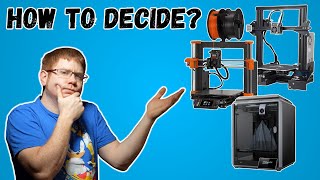
Key FDM Specs: Build Volume, Speed, and Leveling
Key FDM specs: build volume (how big your prints can be), print speed (mm/s), and auto-leveling (makes the first print succeed without manual calibration).Ender 3 vs. Bambu Lab: Community vs. Ease
Related Guides
Frequently Asked Questions
What can a beginner print with a 3D printer?
What filament does a beginner need?
How long does a 3D print take?
Is 3D printing expensive as a hobby?
Do I need to know CAD to 3D print?
How We Analyze Products
We analyze Amazon review data — often thousands of reviews per product — to surface patterns that individual buyers miss. Our process aggregates star ratings, review counts, and buyer sentiment at scale, identifying which strengths and weaknesses appear consistently across the largest review samples available. The 2,056+ reviews analyzed on this page represent real verified-purchase feedback from Amazon buyers.
Each product earned its placement through data: total review volume, average rating, and the specific praise and complaints that repeat most often across buyers. No manufacturer paid for placement on this page. Products appear here because buyers endorsed them at scale, not because a company asked us to feature them.
We use AI to summarize review sentiment — not to fabricate opinions, but to condense what thousands of buyers actually wrote into a readable format. The pros and cons you see reflect the most common themes found in verified purchaser reviews, paraphrased for clarity. We do not claim to have accessed Reddit, YouTube, or specific publications in generating these summaries.
Prices shown reflect Amazon pricing at the time this page was last generated. Click “See Today’s Price” to get the current live price on Amazon. Read our full methodology →