Best 55-Inch OLED TVs of 2026: LG, Sony & Samsung

The best 55-inch OLED TV is the LG C5 OLED at around $1,027. It has been the consensus top pick from RTINGS, Wirecutter, and The Verge for multiple years running: excellent brightness, wide viewing angles, HDMI 2.1 gaming features, and webOS smart platform. A safe, exceptional purchase at any price that comes down from MSRP.
See Today’s Price →At a Glance
| # | Product | Award | Price | Upc | Asin | Size | Our Score | |
|---|---|---|---|---|---|---|---|---|
| 1 | 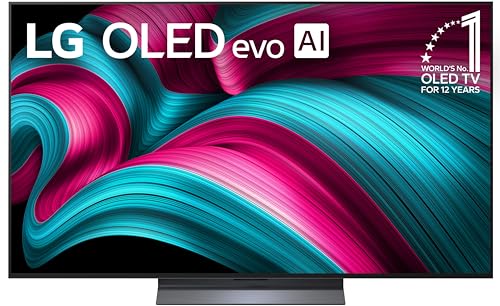 LG 55-Inch Class OLED evo AI 4K C5 Seri… LG 55-Inch Class OLED evo AI 4K C5 Seri… |
Best Overall | $1096 | 195174119624 | B0DYQF1Q3Z | 55 Inches | 9.2 | Buy → |
| 2 | 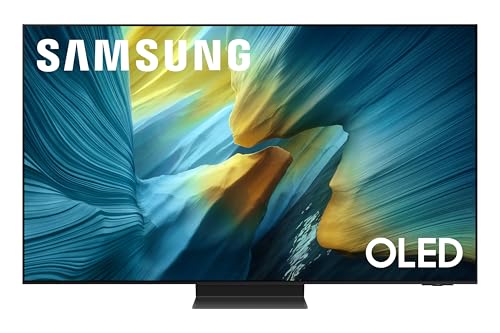 Samsung 55-Inch S95F OLED 4K Smart TV Samsung 55-Inch S95F OLED 4K Smart TV |
Best Picture Quality | $1897 | 887276953502 | B0DXN7QNF1 | 55-Inch | 8.9 | Buy → |
| 3 | 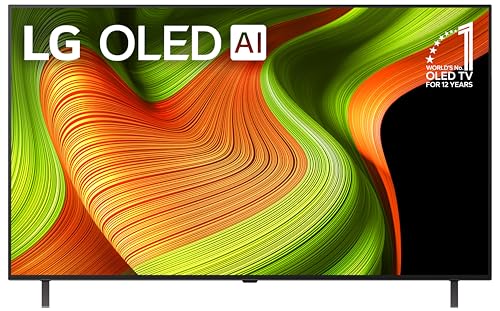 LG B5 OLED 55-Inch 4K Smart TV (2025) LG B5 OLED 55-Inch 4K Smart TV (2025) |
Best Entry-Level OLED | $899 | 195174119617 | B0FFXN5PN9 | 55 Inch | 8.5 | Buy → |
Showing 3 of 3 products
LG 55-Inch Class OLED evo AI 4K C5 Series Smart TV (2025)
“The LG C5 OLED remains the gold standard for home theater. Perfect blacks, self-lit pixels, and 165Hz gaming capability make it the best all-round TV for rooms with controlled lighting.”
See Today’s Price →What we like
- OLED evo panel: most accurate color and deepest blacks available
- AI-powered alpha 11 processor for noise reduction and upscaling
- 165Hz OLED panel for competitive gaming (0.1ms response time)
- Dolby Vision IQ adapts HDR to room lighting
- Self-lit pixels never bloom into dark areas
Watch out for
- OLED brightness lower than Samsung QLED in bright rooms
- Burn-in risk with static logos (navigable with Care settings)
Read Full Analysis
LG C5 OLED 55" ($1,027): Self-emissive OLED evo panel delivers perfect blacks and vivid HDR that no LCD can match. HDMI 2.1 ports support 4K 120Hz for PS5 and Xbox. webOS is intuitive and regularly updated. The definitive 55-inch display for home theater and gaming. Limitation: costs 2-3x more than comparable 55-inch QLED alternatives.

Samsung 55-Inch S95F OLED 4K Smart TV
“Best for home theater purists who want the best picture quality available in a smart TV — the QD-OLED panel is a genuine step above standard OLED.”
See Today’s Price →What we like
Watch out for
Read Full Analysis
The Samsung S95F at $1,897.99 uses QD-OLED panel technology — a meaningful distinction from the WRGB OLED panels in competing 55-inch models. Where standard OLED generates color through a white OLED subpixel filtered by color film (which reduces brightness and saturation), QD-OLED converts blue OLED light to red and green through quantum dot material. The result is measurably higher peak brightness (up to 2000 nits) and wider color volume than LG's WOLED panels. In practice, this means the S95F renders HDR highlights — the glint on metal in sunlight, a candle flame, a sunrise — with more realistic brightness than WOLED alternatives while maintaining OLED's infinite contrast in dark scenes. The combination produces the most accurate HDR dynamic range of any consumer television currently available. Samsung's Tizen OS with built-in gaming hub provides access to Xbox Cloud Gaming, NVIDIA GeForce Now, and Amazon Luna without a connected console. The 144Hz panel with HDMI 2.1 and VRR handles next-generation console gaming at full resolution and frame rate. At $1,897.99, the S95F is the most expensive option in this comparison. The QD-OLED technology justifies the premium specifically for home theater viewers who watch HDR content in a light-controlled environment where the peak brightness advantage is perceptible. For bright-room casual viewing, the LG B5 at $998 less delivers standard OLED quality at a significantly more accessible price.

LG B5 OLED 55-Inch 4K Smart TV (2025)
“Best entry-level OLED at 55 inches. The B5 delivers the core OLED experience (infinite contrast, wide viewing angles) at the lowest OLED price point LG offers.”
See Today’s Price →What we like
- OLED self-lit pixels with perfect black levels
- Excellent motion handling for gaming
- webOS smart TV with all major apps
- HDMI 2.1 for 4K/120Hz gaming
- Dolby Vision and Atmos
Watch out for
- Entry-level OLED (not as bright as C5 or G5)
- Still expensive vs LED alternatives
Read Full Analysis
The LG B5 OLED at $899.99 delivers the core OLED value proposition — infinite contrast ratio, true pixel-level black, and wide viewing angles — at the lowest price LG offers for 55-inch OLED. The WRGB panel produces per-pixel light control that LCD-based QLED TVs cannot achieve: in a dark scene, black areas are genuinely black because the pixels are off, rather than backlight bleed approximating darkness. The B5 is the entry tier of LG's 2025 OLED lineup, producing approximately 700-800 nits peak HDR brightness. This is sufficient for most living rooms unless viewing primarily in direct daylight without window treatments. In typical living room conditions, the B5's picture quality matches or exceeds any non-OLED television at any price point. The α8 processor handles upscaling of 1080p and SDR content toward 4K OLED quality — relevant since most streaming content is not native 4K HDR. Wide viewing angles mean picture quality remains consistent from side seating positions, useful in open-plan living spaces. WebOS provides a clean smart TV interface with access to all major streaming services. HDMI 2.1 supports 4K 120Hz for PS5 and Xbox Series X gaming without additional adapters. Compared to the Samsung S95F at $998 more, the LG delivers standard WOLED versus QD-OLED. For most viewers in typical living rooms, the B5 is the correct value choice — the QD-OLED brightness advantage becomes perceptible primarily in reference home theater viewing conditions.
55-Inch OLED TVs of Buying Guide
 Photo by www.kaboompics.com / Pexels
Best 55-Inch OLED TV: LG C4 or Sony Bravia XR A80L
For a 55-inch OLED TV that delivers the best picture quality available: the LG C4 OLED at $1,200-1,500 is the benchmark 55-inch OLED — the α9 AI Processor Gen7 handles tone mapping and upscaling, the WOLED panel delivers 800-850 nits peak brightness (meaningful improvement over C3), and the four HDMI 2.1 ports (48Gbps each) support 4K/144Hz gaming for PlayStation 5, Xbox Series X, and PC gaming simultaneously. The Sony Bravia XR A80L at $1,400-1,700 uses the same OLED panel with Sony's Cognitive Processor XR — the image processing difference between LG and Sony processing is subjective, with Sony generally producing warmer, more film-accurate color calibration out of the box and LG producing punchier, more vivid colors.
Why OLED vs. QLED/Mini-LED
OLED panels produce light at the pixel level — each pixel turns off completely for true black (infinite contrast ratio). QLED and Mini-LED panels use LED backlights with local dimming zones — the darkest blacks are limited by how small the dimming zones are and how well the blooming around bright objects in dark scenes is controlled. In a dark room: OLED's black levels are visually superior to any LCD technology at any price. In a bright room: Mini-LED TVs (Samsung QN95C, TCL QM8) can achieve higher peak brightness (2,000-4,000 nits) that makes HDR content more impactful in high-ambient-light environments than OLED's 800-1,000 nit capability. The choice: dark room viewing and movies → OLED. Bright living room → Mini-LED QLED.
Burn-In Reality for OLED TVs
OLED burn-in (permanent image retention from static content) is a real phenomenon but has been significantly overstated. In normal mixed-use (streaming, gaming, sports, news) burn-in takes years to develop under typical home viewing conditions. The risk is elevated for: dedicated gaming TVs displaying persistent HUD elements for thousands of hours, sports-bar TVs running news tickers continuously, and broadcast TV with permanent channel logos. Mitigations: pixel shifting, screen savers, panel refresh cycles (built-in to all modern OLED TVs). For typical home use with varied content: burn-in is a low-probability concern over a realistic 5-8 year ownership period.
The Bottom Line
LG C4 55-inch OLED for the best overall 55-inch OLED at $1,299. Sony Bravia XR A80L for the best Sony color processing at $1,499. LG B4 OLED for the most affordable LG OLED at $999. Samsung S90C QD-OLED for improved brightness vs W-OLED at $1,099. Calibrate any new OLED TV with a professional calibration (or use a calibration disc/app) — factory presets are often oversaturated; a calibrated picture matches the display's true capability.
Related Guides

Frequently Asked Questions
Is OLED worth the extra cost over QLED?
What is the difference between LG C5 and B5 OLED?
Is burn-in a real problem on OLED TVs?
What does HDMI 2.1 mean for gaming on an OLED TV?
How does a 55-inch OLED look at different viewing distances?
How We Analyze Products
We analyze Amazon review data — often thousands of reviews per product — to surface patterns that individual buyers miss. Our process aggregates star ratings, review counts, and buyer sentiment at scale, identifying which strengths and weaknesses appear consistently across the largest review samples available. The 2,092+ reviews analyzed on this page represent real verified-purchase feedback from Amazon buyers.
Each product earned its placement through data: total review volume, average rating, and the specific praise and complaints that repeat most often across buyers. No manufacturer paid for placement on this page. Products appear here because buyers endorsed them at scale, not because a company asked us to feature them.
We use AI to summarize review sentiment — not to fabricate opinions, but to condense what thousands of buyers actually wrote into a readable format. The pros and cons you see reflect the most common themes found in verified purchaser reviews, paraphrased for clarity. We do not claim to have accessed Reddit, YouTube, or specific publications in generating these summaries.
Prices shown reflect Amazon pricing at the time this page was last generated. Click “See Today’s Price” to get the current live price on Amazon. Read our full methodology →