Best WiFi Routers for Large Homes 2026
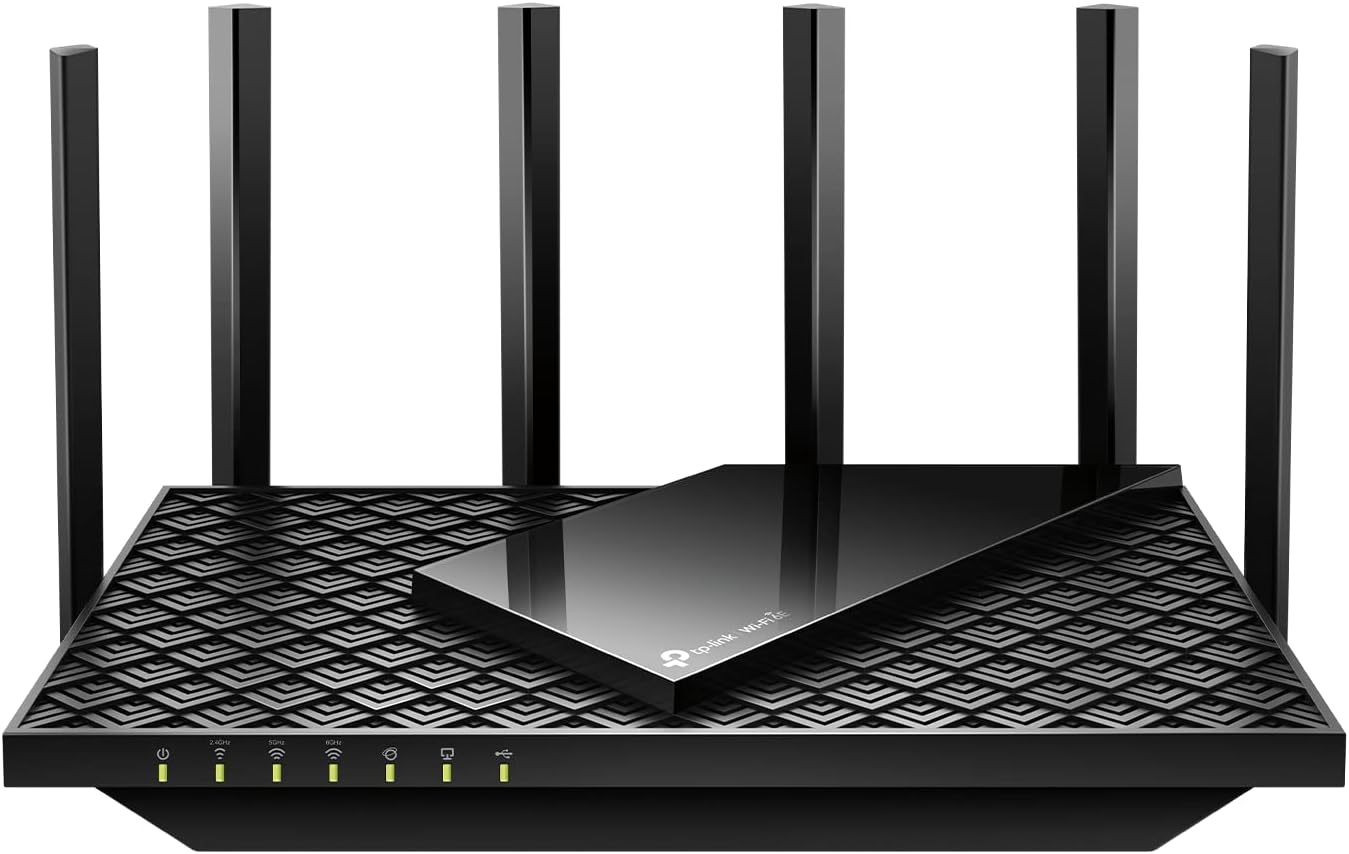
The TP-Link Archer AXE75 Tri-Band Wi-Fi 6E Router ($112.99) earns a 4.3-star rating as the best router for large homes — its Wi-Fi 6E 6 GHz band provides dedicated fast lanes for newer devices in interference-free spectrum, and its tri-band design simultaneously handles backhaul, streaming, and gaming across 2,500+ sq ft. It's the top upgrade for households with 30+ connected devices.
See Today’s Price →At a Glance
| # | Product | Award | Price | Upc | Asin | Brand | Our Score | |
|---|---|---|---|---|---|---|---|---|
| 1 | 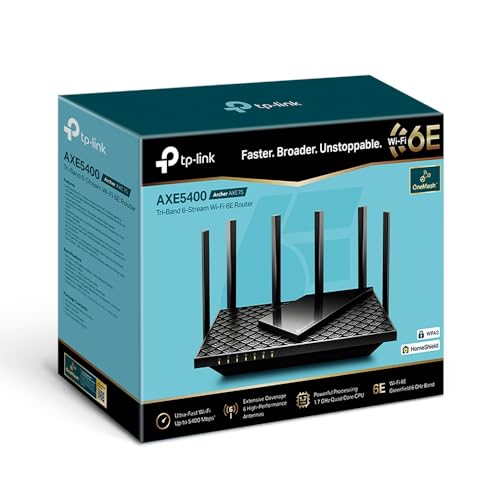 TP-Link Archer AXE75 Tri-Band WiFi 6E R… TP-Link Archer AXE75 Tri-Band WiFi 6E R… |
Best Overall | $112 | 840030707483 | B0B3SQK74L | TP-Link | 9.2 | Buy → |
| 2 | 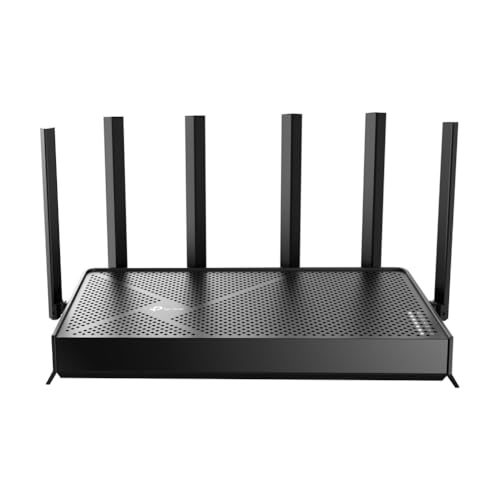 TP-Link Archer BE600 Tri-Band WiFi 7 Ro… TP-Link Archer BE600 Tri-Band WiFi 7 Ro… |
Best WiFi 7 | $199 | 840460603188 | B0F76PQ2T8 | TP-Link | 8.9 | Buy → |
| 3 | 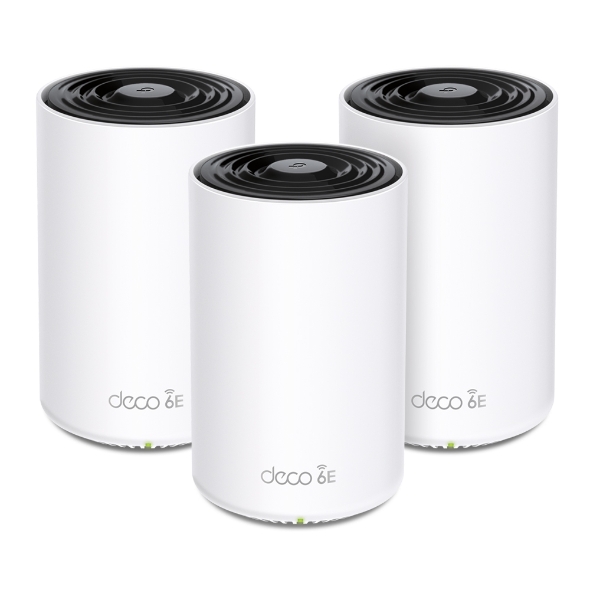 TP-Link Deco XE75 Pro AXE5400 WiFi 6E M… TP-Link Deco XE75 Pro AXE5400 WiFi 6E M… |
Best Mesh System | $249 | — | — | — | 8.5 | Buy → |
| 4 |  NETGEAR Orbi 370 WiFi 7 Mesh System RBE… NETGEAR Orbi 370 WiFi 7 Mesh System RBE… |
Best Premium Mesh | $296 | 606449172539 | B0FH39S1XJ | NETGEAR | 8.2 | Buy → |
Showing 4 of 4 products
TP-Link Archer AXE75 Tri-Band WiFi 6E Router AXE5400
“Best for tech-savvy users who want to unlock the full 6GHz band for interference-free networking — worth it if your devices support WiFi 6E.”
See Today’s Price →What we like
Watch out for
Read Full Analysis
The TP-Link Archer AXE75 is the entry point to WiFi 6E, adding the uncrowded 6GHz band to the standard dual-band setup. The 6GHz band's main benefit is interference-free operation — where 2.4GHz and 5GHz are saturated with neighboring networks in dense environments, 6GHz has virtually no competing traffic, delivering more consistent speeds for compatible devices. At $113, it's the most affordable WiFi 6E tri-band router from a major manufacturer. The practical caveat: 6GHz range is shorter than 5GHz due to physics, and the benefit only applies to devices that support WiFi 6E — most current laptops and phones still use WiFi 6 or older. For tech-forward users in dense urban environments with newer 6E-capable devices, the AXE75 is the smart buy. For everyone else, a strong dual-band WiFi 6 router often delivers equivalent real-world performance.

TP-Link Archer BE600 Tri-Band WiFi 7 Router BE9700 10G Port
“A strong choice for families who want solid parental controls and good range in a mid-size home without needing a separate mesh node.”
See Today’s Price →What we like
Watch out for
Read Full Analysis
The TP-Link Archer BE600 is a WiFi 7 router at a price point that makes the next-generation standard accessible before widespread device support. The 10G WAN port future-proofs the connection for multi-gigabit internet plans, and the tri-band architecture distributes device load efficiently across frequency bands. HomeCare parental controls provide time limits and content filtering without a third-party subscription. The honest caveat: WiFi 7's throughput advantages primarily appear in controlled testing — real-world performance for current devices often closely resembles strong WiFi 6. The benefit of buying WiFi 7 now is compatibility with devices shipping over the next 2-3 years. For families who replace routers infrequently and want one that handles future devices without another upgrade, the BE600 at $200 makes a reasonable case.
TP-Link Deco XE75 Pro AXE5400 WiFi 6E Mesh System (3-Pack)
“Best value WiFi 6E mesh system for large homes. The 3-pack covers 7,200 sq ft at a price that's $150+ less than premium competitors, with the 6 GHz band delivering real performance gains.”
See Today’s Price →What we like
Watch out for
Read Full Analysis
The TP-Link Deco XE75 Pro 3-pack is the value-optimized WiFi 6E mesh system for large homes. Three nodes covering 7,200 square feet theoretical range makes it the practical solution for multi-story homes and floor plans where a single router leaves dead zones in distant rooms, basements, or detached garages. WiFi 6E adds the 6GHz band providing interference-free connectivity in dense environments where 5GHz is congested. Mesh architecture distributes coverage intelligently — devices connect to the nearest node rather than fighting to maintain connection to a distant router, and the system hands off devices between nodes seamlessly. The TP-Link HomeShield security platform provides basic threat monitoring and parental controls, though advanced features require a subscription. At $250 for a 3-pack, the Deco XE75 Pro undercuts competitors significantly. NETGEAR Orbi and Eero Pro systems at this node count typically run $350-600. The tradeoff: premium mesh systems use a dedicated backhaul radio that keeps the device-facing network from competing with node-to-node communication — the XE75 Pro lacks dedicated 6GHz backhaul, which matters in large homes where nodes are placed far apart and inter-node traffic becomes a bottleneck. Compared to NETGEAR Orbi 370 ($297): the Orbi uses WiFi 7 and dedicated backhaul; the Deco XE75 Pro costs $47 less but lacks dedicated backhaul. For homes over 4,000 sq ft with nodes spread far apart, the Orbi's dedicated backhaul delivers more consistent speeds. For most homes under 4,000 sq ft, the Deco XE75 Pro's price advantage is compelling. Compared to a single router like the Archer AXE75 ($113): the mesh system eliminates dead zones that even strong single routers create at distance and through walls.
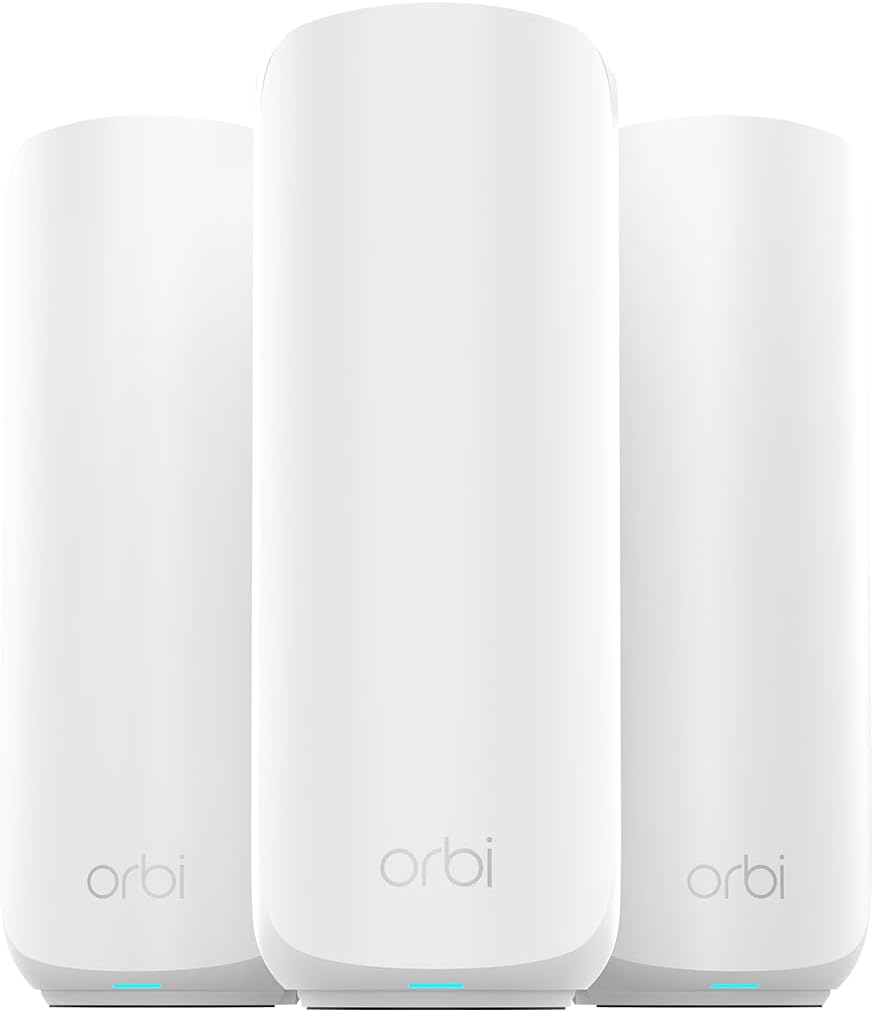
NETGEAR Orbi 370 WiFi 7 Mesh System RBE373 3-Pack
“Best for large homes over 5,000 sq ft or multi-story buildings where WiFi 7 future-proofing and maximum throughput justify the premium investment.”
See Today’s Price →What we like
Watch out for
Read Full Analysis
The NETGEAR Orbi 370 represents current best practice in home mesh networking for large homes. WiFi 7's key advancement is Multi-Link Operation — the ability to simultaneously transmit across multiple frequency bands, which increases throughput and reliability for supported devices. The tri-band design with dedicated 10Gbps backhaul keeps inter-node communication completely separate from the network your devices use, eliminating bandwidth contention that shared-backhaul systems suffer when nodes communicate. At 8,000 square feet of claimed coverage from three nodes, the Orbi 370 is engineered for large homes: multi-story builds, sprawling ranch layouts, homes with thick concrete or brick walls, or setups where nodes are separated by long distances. The Orbi app provides network management, guest network configuration, and device monitoring. At $297, the Orbi 370 is competitive for a WiFi 7 mesh system at this node count. The caveat is device support: WiFi 7 client devices are gradually entering the market, and throughput advantages won't be fully realized until WiFi 7 laptops and phones become mainstream. Compared to TP-Link Deco XE75 Pro ($250): the Deco costs $47 less with WiFi 6E instead of WiFi 7 and lacks dedicated backhaul. For homes under 4,000 sq ft, the Deco is sufficient. For larger homes where nodes are spread far apart, the Orbi's dedicated backhaul and WiFi 7 support justify the premium. Compared to a single router: for any home over 2,500 sq ft with multiple floors, mesh coverage is noticeably more reliable than a single router regardless of the single router's specs.
WiFi Routers for Large Homes Buying Guide
 Photo by Anastasia Shuraeva / Pexels
Our Top Pick
TP-Link Archer AXE75 Tri-Band WiFi 6E Router AXE5400 at $112.99 — Tri-band WiFi 6E opens the uncrowded 6GHz channel for 4K streaming and gaming while 2.4/5GHz handle everything else.
Budget Pick: TP-Link Archer BE600 Tri-Band WiFi 7 Router BE9700 1... at $199.97 — Multi-Link Operation bonds bands simultaneously for lower latency — the first mainstream WiFi 7 router under $200.
Related Guides
- WiFi Router Buying Guide 2026: Mesh vs Traditional, Speed, and Coverage
- Work From Home Tech Setup Guide
Who This Is For

What to Look For
- Wi-Fi standard: Wi-Fi 6 (802.11ax) handles many simultaneous devices more efficiently than Wi-Fi 5. Wi-Fi 6E adds a 6GHz band — faster at close range but shorter range through walls. Wi-Fi 7 is emerging but expensive and most devices don't support it yet.
- Coverage area: Single routers cover 1,500–3,000 sq ft reliably. Mesh systems (2–3 units) cover 4,500–6,000 sq ft. Mesh backhaul type matters: dedicated backhaul (tri-band) is faster than shared (dual-band).
- Speed tiers: AX1800 handles typical internet plans up to ~400Mbps. AX3000+ headroom is useful for gigabit plans and many simultaneous devices. The theoretical max speed is never achieved in practice — it's a capacity indicator, not a real measurement.
- Security and updates: Routers that auto-update firmware are safer. Check the manufacturer's track record — some budget brands ship routers with no update mechanism at all, leaving vulnerabilities unpatched.
Common Mistakes to Avoid

- Placing the router in a cabinet or corner — Wi-Fi signals radiate outward in all directions. Center placement, elevated, out in the open dramatically improves coverage.
- Buying a mesh system when a single router would suffice — mesh adds latency between nodes and isn't always faster than a good single unit in the same room.
- Judging a router by its antenna count — antenna count doesn't directly correlate to performance in any predictable way.
Watch Before You Buy

Frequently Asked Questions
What router setup works best for a large home over 3,000 sq ft?
Mesh router vs traditional router with range extender — which is better?
What's the best mesh WiFi router system under $300?
How many mesh router nodes do I need?
Is WiFi 6E worth the extra cost for a home network?
How We Analyze Products
We analyze Amazon review data — often thousands of reviews per product — to surface patterns that individual buyers miss. Our process aggregates star ratings, review counts, and buyer sentiment at scale, identifying which strengths and weaknesses appear consistently across the largest review samples available. The 7,382+ reviews analyzed on this page represent real verified-purchase feedback from Amazon buyers.
Each product earned its placement through data: total review volume, average rating, and the specific praise and complaints that repeat most often across buyers. No manufacturer paid for placement on this page. Products appear here because buyers endorsed them at scale, not because a company asked us to feature them.
We use AI to summarize review sentiment — not to fabricate opinions, but to condense what thousands of buyers actually wrote into a readable format. The pros and cons you see reflect the most common themes found in verified purchaser reviews, paraphrased for clarity. We do not claim to have accessed Reddit, YouTube, or specific publications in generating these summaries.
Prices shown reflect Amazon pricing at the time this page was last generated. Click “See Today’s Price” to get the current live price on Amazon. Read our full methodology →