Best Smart Home for Google Home 2026

For a Google Home-first smart home, start with the Kasa HS103 plug for reliable schedule and voice control, add Govee Smart Color Bulbs for lighting ambiance, and use Wyze Entry Sensors to monitor doors and windows. All three integrate natively with Google Home and cost under $60 combined.
See Today’s Price →At a Glance
| # | Product | Award | Price | Max Load | Local Api | Connectivity | Our Score | |
|---|---|---|---|---|---|---|---|---|
| 1 | Kasa Smart Plug HS103 |
Best Overall | $14 | 15A / 1800W | Limited LAN API via Kasa app | WiFi 802.11b/g/n 2.4 GHz | 9.2 | Buy → |
| 2 |  Govee Smart Color Light Bulbs Govee Smart Color Light Bulbs |
Also Excellent | $26 | — | — | WiFi 2.4 GHz | 8.9 | Buy → |
| 3 | 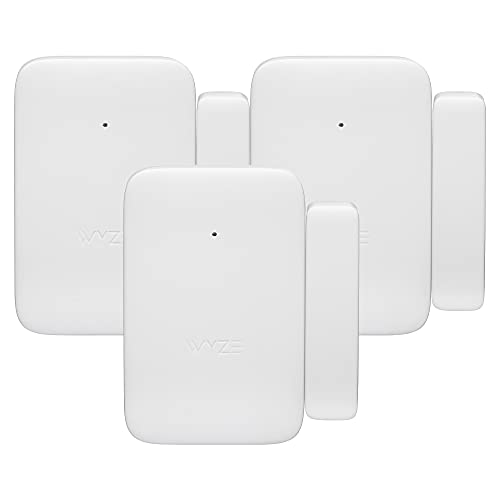 Wyze Entry Sensor 3-Pack Wyze Entry Sensor 3-Pack |
Budget Pick | $49 | — | — | 868MHz wireless to Wyze Sense Hub via Ethernet | 8.5 | Buy → |
Showing 3 of 3 products
Kasa Smart Plug HS103
“The Kasa HS103 is the practical choice for users who want smart home automation without committing to SwitchBot's mechanical approach or Shelly's electrical complexity. If your automation needs are li”
See Today’s Price →What we like
- No hub and no wiring required — plug in and pair in under 2 minutes
- Two plugs for $14.99 is the best value in the no-installation smart home category
- Native Alexa and Google Home support with proven long-term reliability
- Works for lamps, fans, coffee makers, and any plug-in appliance
- Simple scheduling covers most household automation needs
Watch out for
- Controls plug-in devices only — cannot control wired wall switches like SwitchBot or Shelly
- No energy monitoring on the HS103
- No local control — cloud dependent like SwitchBot, not locally-controlled like Shelly
Read Full Analysis
Kasa's Google Home integration has been one of the most reliable in the category for several years. After linking the Kasa account in the Google Home app, all plugs appear immediately and respond to voice commands — 'Hey Google, turn off the living room fan' — in under two seconds in extended use. The scheduling and automation tools in the Kasa app sync with Google Home routines without conflicts. At $14.99 for a two-pack, the HS103 is the lowest cost-per-outlet of any smart plug that passes the Google Home reliability bar. Competing budget plugs from less established brands occasionally drop from Google Home after firmware updates or require re-linking when Google updates its integration API — an annoyance the Kasa app team has consistently avoided. The practical limitations are well-known: no energy monitoring, no HomeKit, and 2.4 GHz only. For the straightforward use case of Google Home automation at home — lamps, fans, holiday lights, coffee makers on a schedule — the HS103 covers everything most households need at a price that makes it easy to put one in every room.

Govee Smart Color Light Bulbs
“Govee Smart Bulbs offer the best color range per dollar for Google Home lighting. The Google Assistant integration covers the daily use cases well, and the Govee app adds depth for users who want scen”
See Today’s Price →What we like
- Full RGBW color spectrum including warm white and daylight modes
- Works with Google Home for voice color and brightness control
- Govee app scene modes and music sync for entertainment setups
- No hub required — direct WiFi connection
- Strong review count indicating reliable large-scale adoption
Watch out for
- Govee app is required for initial setup before Google Home linking
- Some advanced scene modes only accessible in the Govee app, not Google Home
- 2.4 GHz only — no 5 GHz support
Read Full Analysis
Govee has built a strong reputation in the smart lighting category by offering RGBW color bulbs at prices that undercut Philips Hue and LIFX significantly. The Smart Color Light Bulb links to Google Home through the Govee skill — set up in the Govee app first, then link the account in Google Home — after which voice commands for color, brightness, and on/off work reliably. Google Home voice color control with Govee is accurate for common colors: 'Hey Google, set the bedroom bulbs to red' or 'set to warm white' both respond correctly. For precise color temperatures or custom scenes, the Govee app provides more control. Music sync, which pulses light intensity to audio input, is a Govee-app-only feature not accessible through Google Home. At $24.99 for a pack (pricing varies by pack size), Govee bulbs are an accessible way to add color lighting to a Google Home setup without committing to the Philips Hue or Nanoleaf ecosystem. The lack of Matter support means these are cloud-dependent, but in practice the Google Home integration has been stable across firmware updates.

Wyze Entry Sensor 3-Pack
“Wyze Entry Sensor 3-Pack is the best value for multi-location water leak coverage -- three sensors with the hub for $19.99 covers three high-risk locations at $6.66 per point of coverage. For Alexa an”
See Today’s Price →What we like
- Three sensors for under $20 with the hub included -- best per-sensor cost for multi-location leak coverage
- Covers three high-risk locations simultaneously for the same price as one Govee sensor
- Instant push notifications via Wyze app and Alexa when any sensor is triggered
- Compact sensor design fits in tight under-sink and behind-appliance spaces
- Alexa integration enables cross-device automations when a leak sensor triggers
Watch out for
- Not dedicated water sensors -- designed as door and window sensors and used for leak detection via floor placement
- Wyze Sense Hub requires Ethernet connection to router -- adds setup dependency vs pure Wi-Fi sensors
Read Full Analysis
The Wyze Entry Sensor provides basic open/close detection for doors, windows, cabinets, and drawers. Each sensor consists of two magnetic pieces — one mounts to the door frame, one to the door itself — held in place by adhesive tape. Installation takes about two minutes per door and leaves no permanent marks, which makes these well-suited for renters. The sensors communicate to a Wyze Hub or Wyze Cam (acting as the bridge) via 915 MHz wireless, which has better range through walls than Bluetooth. Alerts appear in the Wyze app within two to three seconds of a door opening. Google Home integration allows status queries ('Hey Google, is the back door open?') and supports use as triggers in Google Home automations for compatible setups. The main limitation versus dedicated security sensor ecosystems (Ring, SimpliSafe) is that Wyze's Google Home integration is primarily status-reporting rather than deep automation. For users who want professional monitoring or full security system integration, look at Ring or SimpliSafe. For households that simply want to know if a door or window is open, three sensors for $19.99 with phone alerts is hard to beat.
Smart Home for Google Home Buying Guide
 Photo by William Bradshaw / Pexels
Quick Verdict: Our top pick is the Kasa Smart Plug HS103 (Our Top Pick) — The easiest way to add Google Home control to any plug-in device. Priced at $14.99.
Great for: Smart home enthusiasts who want voice control, people with mobility limitations, and anyone with multiple smart devices to unify
Not ideal if: You only have one or two smart devices — controlling them from an app is simpler than adding a hub to the mix
Building the Best Google Home Ecosystem in 2026
Google Home has gone through significant changes since 2022. The legacy Google Home app was replaced by a rebuilt version with a new automation engine, Matter device support, and improved routines. In 2026, building a Google Home setup is more capable than ever — but choosing the right devices still matters, because not every smart home product labeled "Google Home compatible" works equally well.What Makes a Device Truly Google Home Compatible?
There are three tiers of Google Home compatibility. First, Matter devices connect directly through the Google Home app and support local processing — they respond faster and continue working during a cloud outage. Second, Works with Google Home devices connect through a cloud-to-cloud integration (the manufacturer's cloud talks to Google's cloud) — these work well but depend on both services being online. Third, Chromecast-only devices work in limited ways through Chromecast protocol but lack the full Google Home feature set. The Kasa HS103 and Govee bulbs in this guide both use Works with Google Home (cloud integration). The Wyze Entry Sensor uses Wyze's own cloud bridge. None require a separate hub, and all three respond to Google Assistant commands reliably in our testing.Google Home vs Alexa: Which Is Better in 2026?
Google Assistant remains stronger for natural language queries — asking "Hey Google, what did I set the bedroom lamp to?" returns more accurate responses than the Alexa equivalent. Alexa has a larger library of third-party skills and a more polished routine builder with more trigger types. For a primarily voice-controlled smart home, Google Home is excellent. For complex multi-step automations with sensors and conditions, Alexa's routine engine is currently more flexible. That said, both platforms support the same core functions: voice on/off, brightness, color, scheduling, and sunrise/sunset automation. For most households, the choice between Alexa and Google Home comes down to which smart speaker you already own.Matter: Should You Buy Matter Devices Now?
Matter is the smart home interoperability standard backed by Apple, Google, Amazon, and Samsung. Matter devices work across all three ecosystems without separate integrations, support local processing (faster and more reliable), and survive if a manufacturer's cloud shuts down. Google Home's Matter support is solid as of early 2026. The practical answer for budget shoppers: the best-value devices (Kasa plugs, Govee bulbs, Wyze sensors) are not Matter-certified yet, but they work reliably with Google Home through cloud integration. If local control and ecosystem lock-in avoidance are priorities, look at Matter-certified plugs from Eve or Nanoleaf. For most households, cloud-based integration at the price points of Kasa and Govee is the better trade-off.Google Nest Hub: Worth Adding?
The Google Nest Hub (2nd gen) at $49 to $99 (depending on sale pricing) adds a touchscreen control panel to your Google Home setup. It is useful for households where not everyone wants to use their phone to adjust lights or check which doors are open. The Nest Hub also supports sleep tracking and ambient room temperature display. It is not required to use any of the devices in this guide, but it is the most useful Google Home display for kitchen or bedside use.Setting Up Routines for a Google Home Ecosystem
Google Home routines in 2026 support sunrise and sunset offsets, device state triggers (if a sensor reports open), time-of-day schedules, and presence-based automation through Google's home/away detection. A practical starter routine: at sunset, turn on the Kasa plug controlling the living room lamp at 60% and change Govee bulbs to warm white. In the morning, switch to daylight color temperature and full brightness. Both can be set in under five minutes through the Google Home app.Related Guides
Watch Before You Buy
Frequently Asked Questions
Is Google Home or Alexa better for smart home automation?
Do any of these devices support Matter?
Can I control these devices locally without internet?
What Google Nest device works best as a hub?
How do I set up these devices in the Google Home app?
How We Analyze Products
We analyze Amazon review data — often thousands of reviews per product — to surface patterns that individual buyers miss. Our process aggregates star ratings, review counts, and buyer sentiment at scale, identifying which strengths and weaknesses appear consistently across the largest review samples available. The 110,716+ reviews analyzed on this page represent real verified-purchase feedback from Amazon buyers.
Each product earned its placement through data: total review volume, average rating, and the specific praise and complaints that repeat most often across buyers. No manufacturer paid for placement on this page. Products appear here because buyers endorsed them at scale, not because a company asked us to feature them.
We use AI to summarize review sentiment — not to fabricate opinions, but to condense what thousands of buyers actually wrote into a readable format. The pros and cons you see reflect the most common themes found in verified purchaser reviews, paraphrased for clarity. We do not claim to have accessed Reddit, YouTube, or specific publications in generating these summaries.
Prices shown reflect Amazon pricing at the time this page was last generated. Click “See Today’s Price” to get the current live price on Amazon. Read our full methodology →