Best Science Kits for Kids (2026)

The Thames and Kosmos Chemistry C500 is the best for kids 10+ — over 50 real chemistry experiments with visible reactions, clear instructions, and enough depth to stay engaging across multiple sessions.
See Today’s Price →What You Need to Know
 Photo by Vanessa Loring / Pexels
A science kit for kids works when the experiments produce observable, surprising results — and fails when the chemistry is too weak to show visible reactions, the instructions are written for adults, or the materials run out after two experiments. The best kits balance genuine scientific engagement (real principles, real materials) with kid-accessible presentation (clear steps, satisfying results within 10-15 minutes per experiment). Age appropriateness matters significantly: a kit designed for ages 6-8 will bore a 10-year-old; a kit designed for 10-12 will frustrate a 6-year-old with too many steps and fine motor requirements.
STEM Focus Areas: Chemistry, Electronics, Biology, Coding
Chemistry kits (reactions, slime, crystals) produce the most visually dramatic results and are the easiest to engage young children with — they see something change immediately. Electronics kits (Snap Circuits) teach circuit concepts through tactile building — more durable than chemistry kits because components reuse indefinitely rather than being consumed. Coding kits (Osmo, Wonder Workshop robots) require devices (tablet or iPad) but teach computational thinking through physical interaction. For a first kit, chemistry (ages 4-8) or electronics (ages 8+) have the highest engagement-to-frustration ratio.
Consumable vs. Reusable Components
Chemistry kits use consumable reagents — the vinegar, baking soda, and chemical compounds run out. Kits with limited reagents feel like poor value after a few sessions. Look for kits with 30+ experiments listed, or verify that common household items can substitute for depleted supplies. Electronics and coding kits (Snap Circuits, Wonder Workshop) are fully reusable — the kit pays for itself in ongoing engagement without resupply costs.
How we picked these.
We compared 6 science kits across experiment count, age appropriateness, result visibility, reusability of components, and instruction clarity for the target age range. Thames and Kosmos Chemistry C500 leads for genuine chemistry depth — over 50 experiments with real chemical reactions that produce visible results and build on each other, written for the 10-14 age range.
Watch Before You Buy
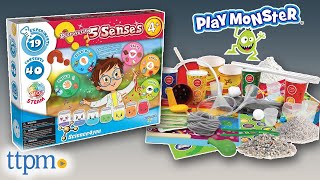


“Thames and Kosmos Chemistry C500: 50+ real chemistry experiments, visible reactions, clear instructions for ages 10-14. The benchmark for serious kids' chemistry kits.”
See Today’s Price →What we like
- 30+ hands-on physics experiments covering levers, pulleys, gears, and gravity
- Step-by-step instruction manual explains the underlying physics for each experiment
- At 2.4 lbs the kit contains all materials needed for the core experiment set
- Recommended for ages 8–14 and builds foundational physics intuition before formal study
Watch out for
- Some experiments require household scissors, paper, and tape not included in the kit
- Designed for guided supervised learning — not independent play for ages under 8
Read Full Analysis
The Thames and Kosmos Physics Workshop leads this science kits page as the structured learning pick for children ages 8–14 ready to move beyond general curiosity into systematic scientific study. The 30+ experiments cover core physics principles — levers, pulleys, gears, and gravitational force — with an instruction manual that explains the underlying science behind each build, not just the assembly steps. That explanatory depth is the differentiator: kits that teach cause-and-effect without explaining why produce entertained children; this one produces children who can explain why their lever lifts more weight with a longer arm. At $39.95 it sits below the KiwiCo Robotics Bundle ($84.95) and well below the Botley 2.0 classroom kit ($293.73). The Snap Circuits Jr at $29.98 covers electronics; this kit covers mechanical physics — they address distinct STEM disciplines and work well together. Two usage notes from the instructions: some experiments require household scissors, paper, and tape not included in the kit, and the kit is designed for supervised learning sessions with an adult. For ages 8–14, this builds foundational physics intuition before formal school coverage.

“Snap Circuits Jr.: build 100+ working circuits from reusable snap components. No consumables, indefinitely reusable, best for ages 8-12 learning electronics basics.”
See Today’s Price →What we like
- 100 guided projects teach real electronics concepts including switches, circuits, and a working AM radio
- Snap-together components require no soldering or tools — accessible for ages 8+
- Color-coded components with pictorial guides enable independent assembly without adult help
- Projects progress from simple light circuits to complex multi-component builds
Watch out for
- Requires AA batteries (not included) to power most projects
- Proprietary snap connectors are not compatible with standard breadboard or Arduino electronics
Read Full Analysis
Snap Circuits Jr earns Best Electronics as the entry point for children ages 8–12 who want to understand how the devices around them actually work. The 100 guided projects build from simple single-component circuits to complex multi-component builds, with a working AM radio among the advanced projects — a genuinely impressive outcome for a $29.98 kit. The snap-together component design eliminates soldering and eliminates the need for adult technical skill to assist; the color-coded components and pictorial assembly guides are clear enough for children to work independently once they understand the snap-connector system. Unlike consumable kits that run out of materials, Snap Circuits components are fully reusable — the same pieces support all 100 projects indefinitely. The two important caveats: AA batteries are required to power most projects and not included, and the proprietary snap connectors are not compatible with standard Arduino or breadboard setups. Children who advance beyond the 100 guided projects and want to design their own circuits will eventually need a different system. For the 8–12 age range learning electronics from scratch, this is the benchmark starting kit.

“KiwiCo Kiwi Crate: monthly STEM box with themed projects and all materials included. Consistent novelty, no resupply needed — each box is a new complete project.”
See Today’s Price →What we like
- 3-kit bundle includes all materials, tools, and step-by-step guides for 3 complete robotics builds
- Covers beginner robotics including motors, circuits, and mechanical linkages for ages 9+
- One-time purchase vs. monthly subscription makes budgeting predictable for gift giving
- KiwiCo kits are designed to take 1–2 hours to complete — structured activity time for each build
Watch out for
- At $84.95 for 3 kits, per-kit cost is slightly higher than the monthly KiwiCo subscription rate
- Completed builds are static display pieces — not re-configurable after initial assembly
Read Full Analysis
The KiwiCo Robotics Build Bundle 3-Pack earns Best Subscription as a one-time bundle purchase that delivers the KiwiCo experience without recurring charges. At $84.95 for three complete robotics kits, all materials, tools, and step-by-step guides for three distinct builds are included. The robotics content covers beginner-level motors, basic circuits, and mechanical linkages appropriate for ages 9+, with each build taking 1–2 hours to complete. That structured session length is meaningful for parents: this is a designed activity with a defined endpoint, not open-ended exploration. KiwiCo's production quality is well-documented across millions of subscription boxes; the Robotics bundle delivers that same production standard in a giftable format. The per-kit cost at $84.95 for three is slightly higher than the equivalent monthly subscription price, but for a gift this is the right format — a wrapped box is more present-worthy than a subscription code. The main limitation: completed builds are static display pieces. Unlike Snap Circuits components which reconfigure indefinitely, the KiwiCo builds are assembled once and done. For gift-givers wanting a single high-quality STEM present for ages 9+, this bundle delivers three complete sessions of quality robotics content.

“Learning Resources Botley 2.0: screen-free coding robot for ages 5-9. Kids program movement sequences using physical buttons — introduces computational thinking before screens.”
See Today’s Price →What we like
- Multi-robot classroom set
- STEM curriculum
- Screen-free
- Group learning
Watch out for
- Very high price — classroom use only practical
- Requires teacher instruction for full use
- Large set means significant setup time
Read Full Analysis
The Learning Resources Botley 2.0 Classroom Set stands apart from every other pick on this science kits page in two ways: it is designed for group instruction rather than individual use, and at $293.73 it is priced accordingly. The classroom set includes multiple Botley robots — the screen-free coding robot for ages 5–9 that introduces computational thinking through physical button-programming rather than app interaction. Children sequence movement commands by pressing physical buttons on the robot itself: turn left, move forward, loop, stop. No tablet, no screen, no app required. That screen-free design philosophy is the Botley product's distinguishing feature and its primary appeal to parents and educators managing screen time. The coding concepts introduced — sequencing, loops, conditionals — are foundational to computer science, and Botley presents them at an age level where abstract screen-based coding tools are developmentally inappropriate. The high price reflects the multi-unit classroom set configuration: a single Botley 2.0 robot retails for roughly $80. For a classroom, maker space, or after-school program serving groups of children, the set cost makes sense. For an individual home purchase, the single-unit version is the appropriate format. The $293.73 classroom set is on this page as the high-end benchmark — for most home buyers, the Thames and Kosmos or Snap Circuits options provide stronger individual value.

“Wonder Workshop Dash: app-controlled coding robot for ages 6-12. Multiple coding languages (Blockly, Wonder, Swift Playgrounds), grows with the child's skill level.”
See Today’s Price →What we like
- Physical robot provides immediate, visible results
- Works with multiple coding apps at different skill levels
- Durable and rechargeable
- Schools and libraries use it
Watch out for
- Premium price for a single toy
- Requires tablet or phone
- May need adult help for initial setup
Frequently Asked Questions
What age is best for a first science kit?
Do science kit supplies run out?
What's the difference between Snap Circuits and Thames Kosmos?
How We Analyze Products
We analyze Amazon review data — often thousands of reviews per product — to surface patterns that individual buyers miss. Our process aggregates star ratings, review counts, and buyer sentiment at scale, identifying which strengths and weaknesses appear consistently across the largest review samples available. The 3,857+ reviews analyzed on this page represent real verified-purchase feedback from Amazon buyers.
Each product earned its placement through data: total review volume, average rating, and the specific praise and complaints that repeat most often across buyers. No manufacturer paid for placement on this page. Products appear here because buyers endorsed them at scale, not because a company asked us to feature them.
We use AI to summarize review sentiment — not to fabricate opinions, but to condense what thousands of buyers actually wrote into a readable format. The pros and cons you see reflect the most common themes found in verified purchaser reviews, paraphrased for clarity. We do not claim to have accessed Reddit, YouTube, or specific publications in generating these summaries.
Prices shown reflect Amazon pricing at the time this page was last generated. Click “See Today’s Price” to get the current live price on Amazon. Read our full methodology →