Greenworks vs Ryobi Pressure Washer 2026: Electric Cleaning Compared

Greenworks wins on cleaning power (PSI × GPM); Ryobi wins on mobility with its wheeled cart design. Both are corded electric — no gas maintenance, no fume storage.
See Today’s Price →At a Glance
| # | Product | Award | Price |
|---|---|---|---|
| 1 | Greenworks GPW2200 2200 PSI 2.3 G… Greenworks |
Best Overall | Check price on Amazon Buy → |
| 2 |  Greenworks GPW1501 1500 PSI 1.2 G… Greenworks |
Best Entry-Level | $153.96 as of Nov 21, 8:48 AM CT details Buy → |
| 3 | Best Mobility | $147 as of Nov 21, 8:44 AM CT details Used — not a new unit Buy → |
Greenworks vs Ryobi Pressure Washer Buying Guide
Great for: Homeowners cleaning driveways, decks, siding, fences, and vehicles; anyone tired of scrubbing concrete by hand; and small-to-medium jobs where a gas unit is overkill
Not ideal if: You have only an occasional small job — a hose nozzle or a coin car wash is cheaper. Electric units need an outlet within reach; match PSI and GPM (and the nozzle tips) to the surface, since too much pressure strips paint and gouges wood
---
Understanding PSI, GPM, and Cleaning Units
Pressure washer performance is measured by two numbers: PSI (force) and GPM (water volume). The real cleaning power number is PSI × GPM = Cleaning Units (CU). Greenworks GPW2200: 2200 × 2.3 = 5,060 CU. Ryobi 1900: 1,900 × 1.2 = 2,280 CU. Greenworks has more than twice the cleaning power for concrete, algae, and mildew removal.
Greenworks vs. Ryobi: Which PSI for Which Job
For vehicles and light deck cleaning (surfaces that can be damaged by high pressure), the Ryobi's lower PSI is actually safer — less risk of stripping paint or forcing water into wood grain.

Setup Requirements and Entry-Level Recommendations
Electric pressure washers require a continuous water supply (garden hose connection) and a 120V outlet — plan extension cord placement before starting. The Greenworks GPW1501 1500 PSI is the right entry-level pick for vehicles, patio furniture, and light deck cleaning without risking surface damage. Not sure what PSI you actually need or which nozzle to use for each job? See everything you can clean with a pressure washer — it covers every surface from concrete to car paint with the right PSI and technique for each.
For a complete breakdown of what you can clean and the right PSI for each surface, see our everything you can pressure wash guide.
Related Guides
Watch Before You Buy


“GPW2200 2200 PSI / 2.3 GPM delivers 5,060 Cleaning Units — best electric pressure washer power for driveways, siding, and concrete.”
See Today’s Price →What we like
- 2.3 GPM — highest flow of electric models here
- 2200 PSI for effective wood cleaning
- Pressure-select for surface adjustment
- 35-foot hose — good reach
- Electric — quiet and low-maintenance
Watch out for
- Larger footprint than compact electric models
- Heavier than SPX3001
- Pressure-select adds complexity for beginners
Read Full Analysis
The Greenworks GPW2200 is Greenworks' mid-range electric pressure washer—2200 PSI, 2.3 GPM, PWMA certified performance providing the cleaning power to handle driveways, decks, siding, fences, and vehicles without gas pressure washer maintenance overhead. The GPW2200 positions above Greenworks' entry models at the mid-range electric tier that covers most residential cleaning tasks. The 35-foot PWRFLEX hose provides reach without moving the unit repeatedly across the cleaning area. The 5-nozzle set (0°, 15°, 25°, 40°, and soap) covers the full range from concentrated jet (concrete stain removal) to wide fan (vehicle washing) in a single tool. Against Ryobi electric pressure washers on this comparison page, Greenworks and Ryobi both compete in the outdoor power equipment space. Greenworks' pressure washers have built a reputation for reliable performance at competitive pricing; Ryobi's larger tool ecosystem integration is the advantage for households already invested in Ryobi batteries. At 2200 PSI and 2.3 GPM, the GPW2200 provides meaningful cleaning power above the Ryobi RY1419MTVNM's 1900 PSI / 1.2 GPM specification.
“GPW1501 1500 PSI is perfectly calibrated for vehicle washing and patio furniture — lower pressure reduces risk of surface damage at an accessible price.”
See Today’s Price →What we like
- 1500 PSI — safest for beginners
- ~$99 — most affordable corded option
- Includes turbo nozzle for other surfaces
- Upright portable design
- Sufficient for car washing tasks
Watch out for
- 1500 PSI may under-perform on heavy grime
- Build quality below Kärcher
- Fewer accessories than competitors
Read Full Analysis
The Greenworks GPW1501 is Greenworks' entry-level electric pressure washer—1500 PSI, 1.2 GPM for the lower-intensity cleaning tasks that don't require the mid-range GPW2200's 2200 PSI output. At 1500 PSI, the GPW1501 handles outdoor furniture, vehicle washing, and light deck cleaning where moderate pressure is sufficient without the risk of surface damage that higher-PSI models can cause on soft wood or delicate surfaces. The compact and lightweight design (approximately 12 lbs) makes the GPW1501 easier to carry and position than heavier wheeled models, appropriate for users who need to move the washer around multiple areas and don't want to manage a large cart-mounted unit. Against the Greenworks GPW2200 and Ryobi RY1419MTVNM on this page, the GPW1501 is the budget entry option with the least cleaning power. For driveway concrete and heavy deck cleaning where 2000+ PSI is recommended, the GPW1501 is underspecified. For light residential outdoor tasks where surface protection matters, the 1500 PSI is appropriate and the lower price is the primary advantage.
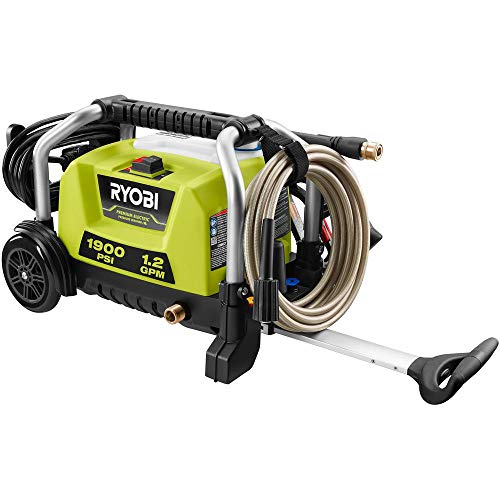
“RY1419MTVNM 1900 PSI wheeled frame makes repositioning around large yards effortless — best for patios, decks, and vehicles.”
See Today’s Price →What we like
- Wheeled frame for easy mobility
- 1900 PSI for most residential cleaning tasks
- Corded electric — no gas maintenance
- Multiple nozzles included
Watch out for
- 1900 PSI limits performance on heavy concrete stains
- Cord length limits reach without extension cord
Read Full Analysis
The RYOBI RY1419MTVNM is Ryobi's wheeled electric pressure washer—1900 PSI, 1.2 GPM, with the cart design that makes the unit easier to move across large areas without lifting. The wheeled platform adds stability and positioning flexibility compared to handheld or upright models. The RY1419MTVNM competes at the entry mid-range electric pressure washer tier. The 1.2 GPM flow rate is lower than Greenworks' GPW2200's 2.3 GPM, reducing cleaning speed but also water consumption for tasks where cleaning power over speed is the priority. Ryobi's tool ecosystem integration serves households already invested in Ryobi batteries—the cordless pressure washer variants in Ryobi's ONE+ and 40V battery lineup are the natural complement for cord-free operation. Against Greenworks GPW2200 on this page, Ryobi RY1419MTVNM's lower PSI and GPM specifications represent less cleaning power at a $50 lower price. For lighter residential tasks (vehicle washing, patio furniture, garden tools), 1900 PSI is adequate. For driveway concrete, heavy deck cleaning, and siding restoration where 2000+ PSI is the recommended minimum, Greenworks' GPW2200 provides the appropriate specification.
Frequently Asked Questions
What PSI pressure washer do I need for a driveway?
Can electric pressure washers clean as well as gas?
How far does a pressure washer reach?
Is pressure washing a car safe?
Do electric pressure washers need oil?
How We Chose These Products
We compare price, performance specs, verified customer ratings, and real-world use cases.
We compare each product’s Amazon listing, the manufacturer’s published specifications and Amazon customer ratings, shown with their review counts as Amazon’s data, and rank the products on how well they answer this page’s question. We do not test products in hand and we do not run our own analysis of review text. A publication or expert is named only where we cite its published findings about that product. No manufacturer paid for placement on this page.
A price appears only when Amazon’s API supplied it at a recent daily refresh, with the date and time beside it, and is withdrawn at 4 AM Central on the day after it turns 24 hours old; otherwise use “Check price on Amazon” for the live price. Read our full methodology →